
Hypnea musciformis
Hypnea musciformis
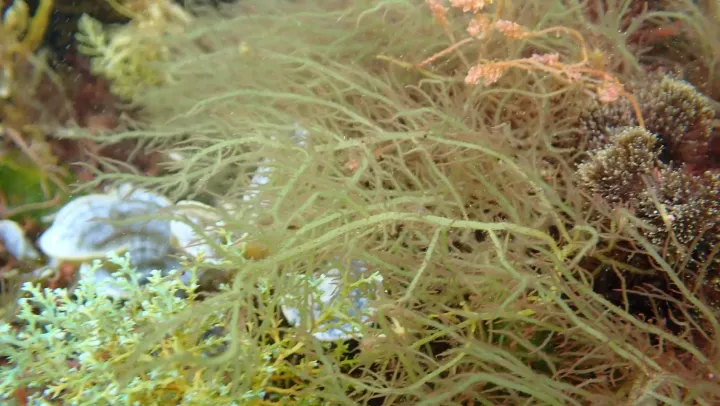
Description
Sowing dates
Hypnea musciformis is a commercially important red seaweed species, primarily cultivated through vegetative propagation where healthy thallus fragments are secured to cultivation structures.
The farming process begins by attaching small pieces of the seaweed to polypropylene ropes or nets, which are subsequently deployed in suitable marine environments for growth.
Successful planting requires selecting robust mother plants to ensure high growth rates and resilience to environmental stressors within the cultivation area.
Proper spacing between fragments is vital during the initial deployment phase to maximize the surface area for growth while preventing overcrowding that could hinder development.
Techniques for securing the biomass often involve knotting or using biodegradable ties that allow the seaweed to integrate into the rope structure as it expands over the following weeks.
Growing requirements
Hypnea musciformis thrives in specific marine conditions, requiring a salinity range of 25–35 ppt to maintain optimal metabolic activity and cellular integrity.
Temperature is a key limiting factor, with the ideal range for rapid biomass accumulation being between 20 and 28 degrees Celsius, depending on the specific strain.
Adequate water movement is essential as it ensures a constant supply of nutrients, primarily dissolved nitrogen and phosphorus, which are vital for the plant's development.
Light intensity significantly influences photosynthesis, necessitating the placement of farms at depths where solar radiation is sufficient but not damaging to the algal tissues.
Maintaining high water quality is paramount, as the presence of heavy metals or excessive turbidity can negatively impact the growth and the subsequent chemical quality of the product.
Yield
The productivity of Hypnea musciformis farms is characterized by high growth rates, often allowing for multiple harvest cycles within a single annual period.
Under favorable environmental conditions, the biomass can double in size within a few weeks, depending on the nutrient content of the water and light exposure.
Harvesting efficiency is improved by adopting systematic monitoring practices that allow farmers to identify the peak biomass accumulation before potential degradation occurs.
Total yields per hectare are significantly influenced by the management of the farm infrastructure and the ability to maintain optimal density across the cultivated areas.
Technological improvements in cultivation hardware and monitoring sensors have enabled producers to predict yields with higher accuracy and stabilize economic returns.
Main diseases and pests
Epiphytic algae represent a major threat to Hypnea musciformis, as they compete for sunlight and nutrients, often leading to reduced crop quality and biomass loss.
Marine herbivores, such as urchins and various fish species, can cause significant damage to the farms if the cultivated areas are not properly protected or managed.
Bacterial pathogens are known to cause diseases characterized by tissue bleaching or rotting, which often emerge during periods of thermal stress or poor water circulation.
Blooms of microalgae or dinoflagellates can negatively affect the health of the crop by altering water chemistry or creating light-limiting conditions in the upper water column.
Routine inspection and mechanical cleaning of the ropes are the primary methods used by seaweed farmers to mitigate these threats and ensure the overall health of the crop.
Harvesting
Harvesting involves the retrieval of cultivation ropes or nets from the water, followed by the systematic removal of the seaweed biomass from the support structures.
Post-harvest processing begins with thorough washing in clean seawater to eliminate sand, epiphytes, and other organic debris accumulated during the growing cycle.
The drying process is crucial for long-term storage, typically performed by spreading the seaweed on platforms under direct sunlight until the moisture content is reduced to 10–15%.
Proper packaging and dry, ventilated storage facilities are essential to prevent mold growth and the degradation of the carrageenan components extracted from the plant.
The primary industrial use of Hypnea musciformis is the production of kappa-carrageenan, a highly valued stabilizer and gelling agent used across the global food industry.