
Cistus aguilarii
Cistus aguilarii
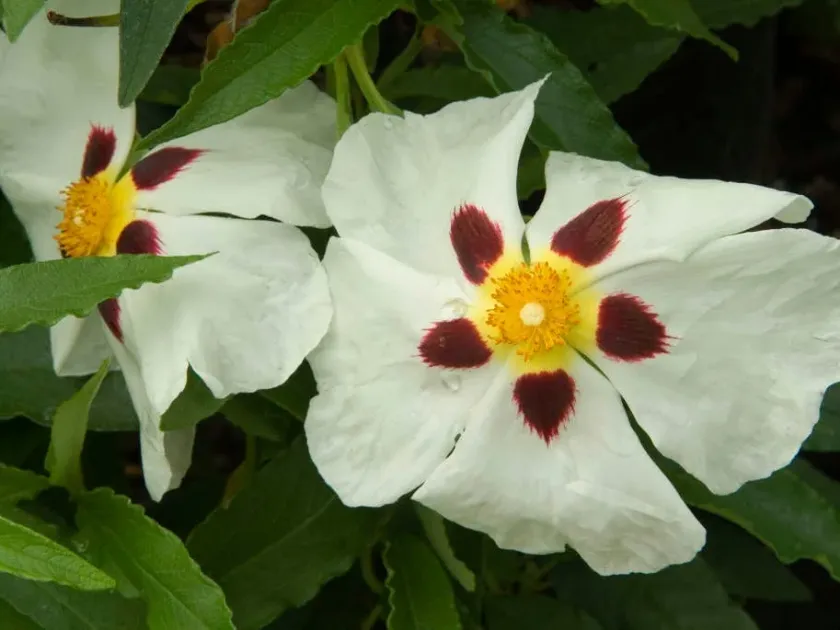
Description
Growing requirements
Cistus aguilarii is an evergreen shrub belonging to the Cistaceae family, recognized as a natural hybrid between Cistus populifolius and Cistus ladanifer. This hardy plant is highly valued for its aromatic properties and its resilience in challenging environments.
The cultivation of this species requires full sun exposure to thrive. Optimal sunlight is essential not only for the plant's structural development but also for maximizing the synthesis of the aromatic resinous compounds found on its leaves and stems.
Soil requirements are relatively modest, provided the ground is well-drained. Sandy, rocky, or gravelly soils are ideal, as the plant is highly susceptible to root rot if placed in heavy, waterlogged conditions where moisture lingers.
The plant is exceptionally drought-tolerant once established, making it a sustainable choice for arid and semi-arid agricultural zones. Its biological adaptations allow it to survive periods of intense heat and prolonged dry spells without irrigation.
Regarding climate, Cistus aguilarii prefers a Mediterranean-type environment with mild winters. While it can withstand some cooling, it is not considered frost-hardy and requires protection from severe freezes to ensure year-round survival.
Main diseases and pests
The most significant threats to Cistus aguilarii arise from poor environmental management, particularly excessive moisture. Fungal infections, such as Phytophthora or Pythium root rot, can devastate entire plantations if drainage is inadequate.
Insect pests are generally deterred by the plant's high resin content, which acts as a chemical barrier. However, in low-vigor specimens, minor infestations of aphids or spider mites may occur, necessitating targeted monitoring.
To maintain plant health, it is essential to ensure proper air circulation between individual bushes. Planting at appropriate densities prevents the accumulation of humidity within the canopy, thereby discouraging the spread of airborne pathogens.
Sanitation practices play a key role in disease prevention. Regularly removing dead or dying branches helps maintain the plant's health and reduces the amount of organic material available for potential fungal colonization.
Chemical intervention should be used sparingly to maintain the organic integrity of the harvested resin. Instead, focus on providing a site that mimics the plant’s natural habitat to minimize stress and promote natural resistance.
Harvesting
The primary economic focus for Cistus aguilarii is the extraction of labdanum, a sticky, amber-colored resin. This substance is secreted by the plant as a natural defense mechanism against dehydration and solar radiation.
Harvesting techniques vary, but generally involve the collection of young twigs or the scraping of the resinous exudate during the height of the summer. The warmest hours of the day are typically chosen, as the resin becomes more fluid and easier to gather.
In the fragrance industry, labdanum is a critical ingredient used as a fixative. It provides a unique, leathery, and ambery base note that enhances the longevity and depth of luxury perfumes and cosmetic formulations.
Beyond fragrance, the plant is frequently utilized in xeriscaping and landscape architecture. Its ability to maintain a lush appearance while requiring almost no water makes it a premier choice for sustainable urban and residential garden design.
Modern research has also highlighted the potential of Cistus extracts in the pharmaceutical sector. Compounds derived from the plant exhibit potent antioxidant, antiseptic, and anti-inflammatory properties, suggesting future value in healthcare.