
Kingdonia
Kingdonia
Kingdonia is a genus of rare perennial herbaceous plants that constitutes its own botanical family, Kingdoniaceae. It is not an agricultural crop and has no history of commercial cultivation, as it remains a highly specialized wild species.
What the section contains

Kingdonia
The genus consists of a single species, Kingdonia uniflora. It is endemic to China, specifically found in the mountain ranges of Gansu, Shaanxi, Sichuan, and Yunnan provinces, where it thrives in very specific environmental niches.
The plant requires high-altitude, moist, and shaded forest environments to survive. It typically grows at elevations ranging from 2,000 to 4,000 meters above sea level, making it extremely sensitive to any changes in local climate conditions or forest humidity.
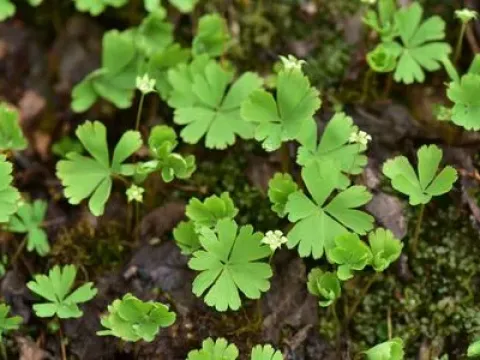
Botanically, Kingdonia is characterized by a creeping rhizome and solitary leaves that display unique dichotomous venation. These morphological traits are considered primitive, providing critical insights into the early evolutionary development of flowering plants.
There are no agricultural or industrial applications for this plant. Its value is strictly scientific and ecological, as it is protected as a relic species that helps researchers understand plant evolution and the biodiversity of mountain forest ecosystems.