
Kingdonia uniflora
Kingdonia uniflora
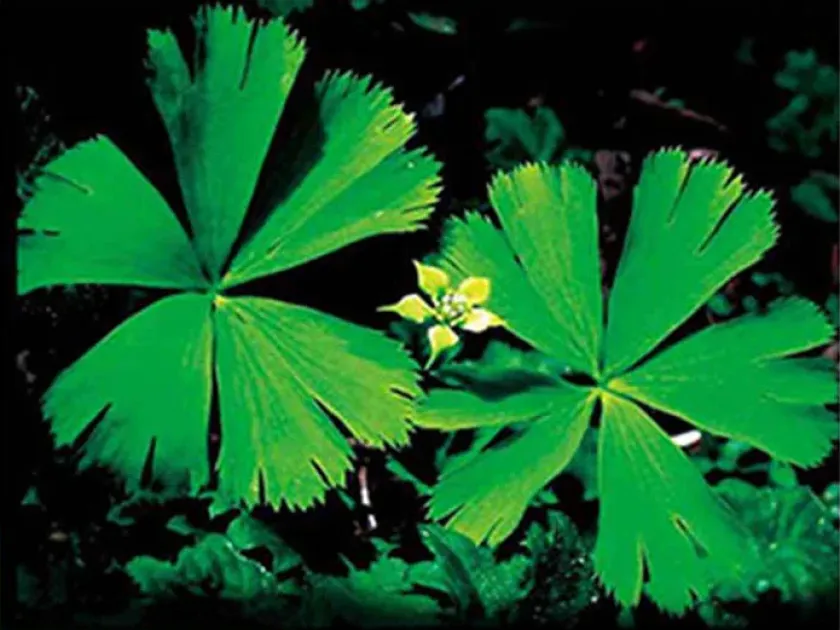
Description
Growing requirements
Kingdonia uniflora is a unique herbaceous perennial plant classified as the sole member of the genus Kingdonia. It belongs to the Circaeasteraceae family, which is recognized by botanists for its primitive evolutionary characteristics and morphological simplicity.
The native distribution of this species is confined to the high-altitude mountainous regions of China, particularly in the provinces of Shaanxi, Gansu, Sichuan, and Yunnan. It naturally inhabits damp, shaded forest floors and alpine meadows at elevations ranging from 2700 to 4000 meters.
Morphologically, the plant develops via a creeping rhizome from which single leaves emerge. The plant typically produces a single, actinomorphic flower on a stalk, reflecting its specific evolutionary adaptation to high-mountain environments with limited growing seasons.
Environmental requirements for Kingdonia uniflora are extremely stringent. The species demands high humidity, cool air temperatures, and rich, moist soil. It is highly sensitive to fluctuations in moisture and light, making cultivation in artificial environments or agricultural settings nearly impossible.
In terms of хозяйственное (economic) use, the plant holds no agricultural value but is of significant scientific interest. It is studied as a living relic, providing insight into the ancestral traits of early angiosperms that have persisted to the present day.
Main diseases and pests
The primary threat to the existence of Kingdonia uniflora is habitat loss resulting from deforestation and anthropogenic interference. As a specialist species, it cannot survive in altered landscapes where the delicate forest floor microclimate is destroyed.
Climate change poses a severe risk, as rising temperatures and shifting precipitation patterns directly affect the high-altitude niches this plant occupies. The narrowing of suitable ecological zones puts extreme pressure on remaining populations.
Invasive or opportunistic species often outcompete Kingdonia in disturbed areas. Because the plant has slow vegetative growth rates, it lacks the ability to recolonize or recover quickly once its habitat is disrupted.
Pathological threats include susceptibility to fungal infections, particularly when the soil is waterlogged or the humidity is insufficient for healthy transpiration. Such stresses often lead to rhizome decay and the eventual death of the plant specimen.
Conservation efforts are critical for this species. Being a rare relic, it is frequently highlighted in biodiversity reports to encourage the protection of high-altitude ecosystems in China from further fragmentation.