
Round-leaved valerian
Valeriana rotundifolia
Description
Sowing dates
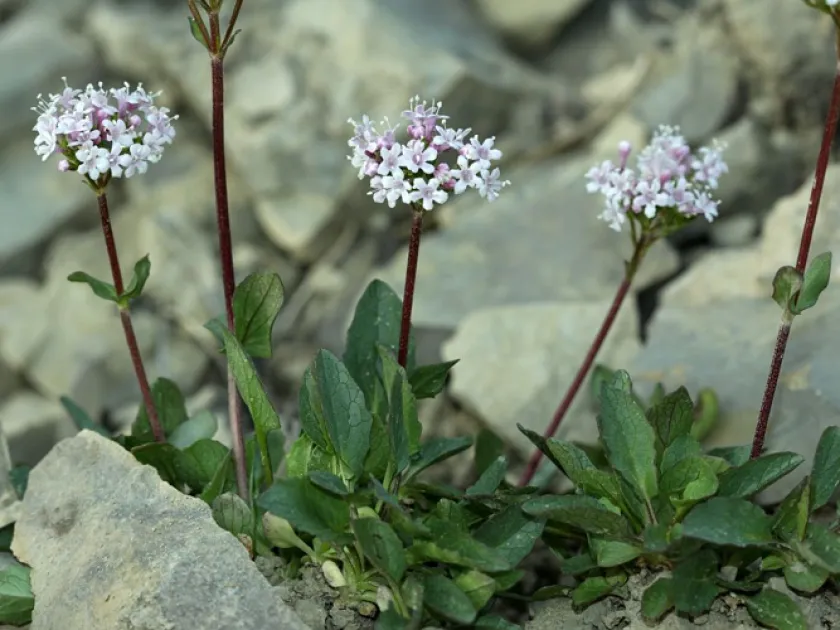
Round-leaved valerian (Valeriana rotundifolia) belongs to the Caprifoliaceae family and is a perennial herbaceous plant. For successful propagation, seeds are sown in late autumn or early spring after mandatory cold stratification, as they require low temperatures to break dormancy.
The optimal time for sowing is mid-April, once the soil has warmed to at least 10 degrees Celsius. Seeds should be sown in prepared furrows at a depth of no more than 0.5–1 cm, maintaining spacing between rows to ensure proper plant ventilation.
In the first year of growth, the plant primarily develops a basal rosette of leaves, making it essential to avoid overcrowded beds. Thinning should be performed at the 2–3 true leaf stage, leaving at least 20–25 cm between individual plants.
Vegetative propagation via rootstock division is performed in early spring or autumn. This method allows for the rapid production of high-quality planting material that maintains the specific characteristics of the cultivar.
The use of plastic covers during the initial growth phase promotes faster rooting and development of the root system, which is crucial for a perennial crop during its first year of establishment.
Growing requirements
The crop has high soil moisture requirements and prefers fertile, humus-rich loams or sandy loams. Valeriana rotundifolia is highly sensitive to soil pH and performs best in neutral soil conditions.
Moderate light exposure is required for normal development. Although the species can tolerate partial shade, open and well-warmed plots are recommended to maximize the accumulation of biologically active compounds in the roots.
Proper soil aeration is a critical success factor. Soil compaction or water stagnation during the autumn-winter period often leads to root rot, which can be devastating for the entire plantation.
During the active growth stage, the crop requires regular feeding with balanced mineral fertilizers containing phosphorus and potassium. Nitrogen fertilizers must be used sparingly to avoid stimulating excessive leaf growth at the expense of root development.
The plant responds well to mulching the root zone with organic materials, which helps retain soil moisture during summer heat and suppresses weed competition in the aisles.
Yield
Agricultural use of round-leaved valerian is primarily aimed at harvesting rootstocks for pharmaceutical needs. Industrial yields of dried raw material typically range from 15 to 25 centners per hectare when agrotechnical standards are strictly followed.
Peak productivity is observed in the second year, when the rootstock reaches its full mass and contains the highest concentration of essential oils. Keeping the crop in the field for more than three years leads to root lignification and a decline in raw material quality.
Total yield depends heavily on soil structure: in loose, aerated soils, the root system develops more vigorously, which directly impacts the weight of the marketable product. Irrigation during dry periods can increase yield by 20–30 percent.
Crop quality is defined by both mass and chemical composition. Biologically active substances accumulate gradually, so premature harvesting is prohibited, as it reduces the therapeutic value of the final product.
Standardization requires cleaning roots from soil and thorough washing immediately after harvest. Proper primary processing prevents the loss of valuable components and ensures stable long-term storage.
Main diseases and pests
The most common diseases of valerian are powdery mildew and various types of root rot, often caused by poor moisture management. Preventive fungicides are used to mitigate these risks.
Among pests, wireworms and cutworm caterpillars represent the greatest danger to the underground parts of the plant. Control strategies include deep autumn plowing and proper crop rotation to break pest life cycles.
Soil waterlogging promotes rot development; therefore, adequate drainage is the best protection for the plantation. It is important to avoid planting valerian after crops that share common pests with it, such as Solanaceae.
In the event of massive aphid infestation on young leaves, bio-preparations are used to maintain the ecological purity of the medicinal product. Synthetic chemical pesticides are used very sparingly on valerian plantations.
Regular weeding not only reduces competition for nutrients but also improves soil ventilation, which inhibits pest reproduction and the development of pathogenic microflora.
Harvesting
Harvesting is carried out in the autumn after the growing season concludes and the aerial parts begin to yellow. This timing ensures that the concentration of active ingredients in the roots reaches its peak.
Rootstocks are excavated mechanically or by hand, taking care to preserve the integrity of the root mass. Immediately after extraction, roots are shaken free of soil to prevent deep fiber contamination.
Washing is performed in running water, after which any remaining stems and damaged sections are removed. The cleaned material is then wilted in the open air for several days to reduce initial moisture content.
Final drying is conducted in specialized driers at a temperature not exceeding 40 degrees Celsius. Exceeding this threshold causes the evaporation of volatile essential oils and the loss of the valerian’s specific aroma.
Storage of dried material is carried out in dry, well-ventilated rooms protected from direct sunlight. A properly dried root will have a distinct, strong odor, which is the primary quality criterion for the pharmaceutical industry.