
Rock honeysuckle
Lonicera rupicola
Description
Growing requirements
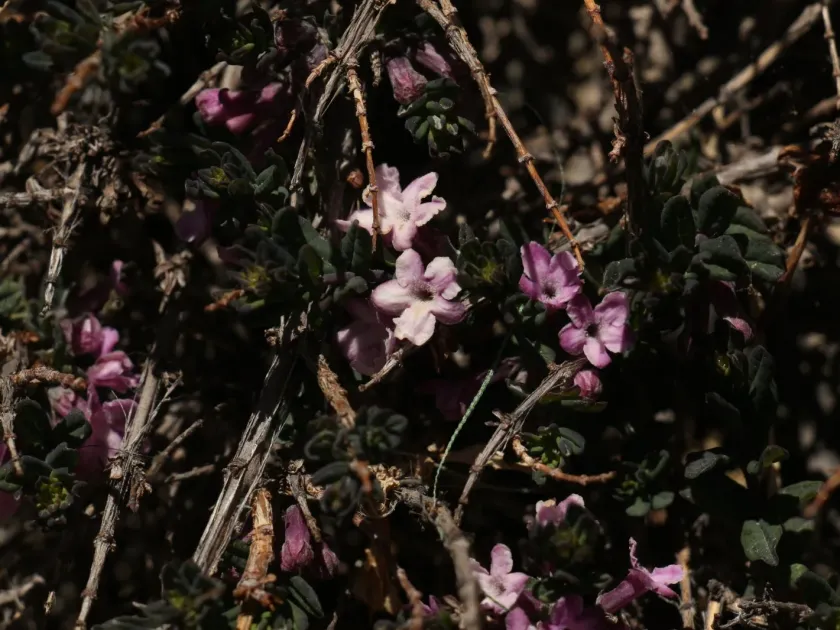
Rock honeysuckle (Lonicera rupicola) is a deciduous, compact shrub belonging to the Caprifoliaceae family. Native to the high-altitude mountain regions of Central and East Asia, this species has evolved to survive in challenging environments, often thriving on rocky slopes and steep terrain.
The botanical profile of the plant includes dense branches with small, leathery leaves and small, often yellowish, tubular flowers. Its physical structure makes it an excellent candidate for erosion control and ornamental planting in environments where other shrub species might struggle to establish.
Cultivation requirements for Lonicera rupicola center around soil drainage and light exposure. It performs best in well-draining, gritty, or sandy soils, mimicking its natural mountainous habitat. While it is highly adaptable, it requires protection from waterlogged conditions to prevent root rot.
Agronomic management is relatively low-maintenance, requiring minimal fertilization and pruning. The plant is prized for its extreme cold hardiness, allowing it to remain dormant and healthy during severe winters. It prefers open, sunny positions to ensure optimal bloom and foliage density.
In landscaping, this species is frequently used for rock gardens, slope stabilization, and low-growing hedge applications. Its ability to withstand wind and poor soil conditions makes it a functional choice for sustainable gardening and ecological restoration projects in mountainous areas.
Main diseases and pests
Common plant health issues include powdery mildew, which can develop if air circulation within the shrub's canopy is inadequate. Aphids are also a frequent pest, particularly during the early spring flush, when they target the succulent new growth of the plant.