
Knautia mollis
Knautia mollis
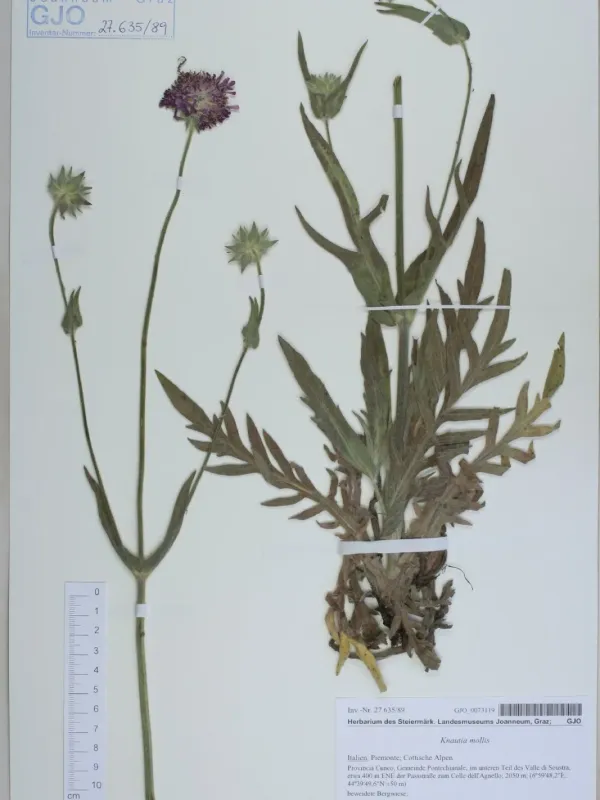
Description
Sowing dates
Knautia mollis, a member of the Caprifoliaceae family, is a herbaceous perennial that is best propagated by sowing seeds in early spring when the soil has sufficiently warmed.
To improve germination rates, seeds can be subjected to a short period of cold stratification, simulating natural winter conditions, which ensures more uniform emergence.
Seeds should be sown at a depth of approximately 1-2 centimeters in well-drained, fertile soil, ensuring they are placed in rows spaced 30 to 40 centimeters apart.
Consistent soil moisture is essential during the germination phase, but care must be taken not to waterlog the soil, which can hinder root development of young seedlings.
Once seedlings have reached the two-leaf stage, thinning is necessary to provide adequate space for air circulation and nutrient uptake, preventing overcrowding within the rows.
Growing requirements
This species thrives in sunny to partial-shade locations, making it a versatile choice for diverse landscape applications and meadow restoration projects.
It prefers fertile, well-draining loamy soils with a neutral or slightly alkaline pH; poor drainage is the most significant limiting factor for successful cultivation.
The plant is highly adaptable to climate conditions, showing good hardiness in temperate zones, although it benefits from moderate moisture during active growth stages.
Regular maintenance involves keeping the site free from invasive weeds, which can quickly outcompete the young plants for resources and sunlight during their establishment.
In mid-summer, a layer of organic mulch can help retain soil moisture and regulate temperature around the root zone, supporting healthier plant growth.
Main diseases and pests
The main pathological threats include powdery mildew, which often develops in stagnant air conditions, and root rots caused by excessive soil moisture and poor drainage.
Aphids represent the most common pest challenge, particularly during the onset of the flowering season, as they congregate on the succulent stems and flower buds.
During prolonged wet spells, slugs and snails can cause cosmetic and structural damage by feeding on the foliage of younger plants and developing rosettes.
Prevention involves ensuring proper plant spacing for airflow and avoiding excessive overhead irrigation, which creates an environment conducive to fungal spore germination.
Monitoring the undersides of leaves and using biological pest control agents is recommended to manage infestations without disrupting the local ecosystem of pollinators.
Harvesting
Knautia mollis is highly valued for its aesthetic appeal in naturalistic gardens and its role in supporting native biodiversity by attracting bees and butterflies.
Seeds should be harvested when the seed heads turn brown and begin to dry naturally, which typically occurs in late summer or early autumn depending on the climate.
Cut flowers for floral arrangements are harvested when the blooms are fully expanded, allowing for optimal vase life and display quality in interior settings.
If managed for forage or green biomass, mowing should occur before the plant reaches full lignification to ensure the highest protein content and digestibility for livestock.
Post-harvest care involves clearing away dead foliage and debris to prevent the overwintering of pests and pathogens, ensuring the plant remains healthy for the next season.