
Curly sheep's-bit
Jasione crispa
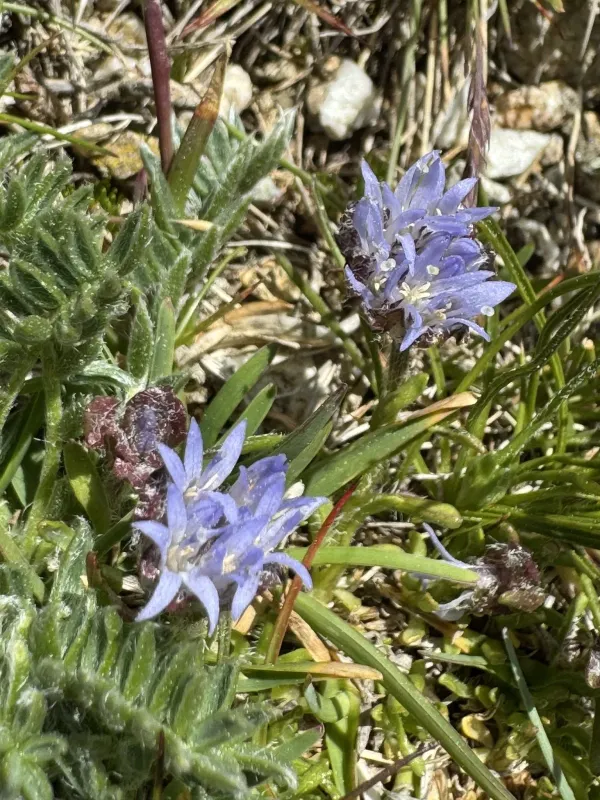
Description
Sowing dates
Propagation of Jasione crispa is typically achieved through seeds, which should be sown in early spring to allow for adequate establishment before winter.
Because the seeds are extremely small, they require a light pressing into the soil surface without being buried, ensuring access to necessary light for germination.
Cold stratification for several weeks before sowing can significantly improve germination rates, as the species is adapted to cooler mountain climates.
When starting in containers, use a well-draining seed-starting mix to prevent damping off, which is a common risk for seedlings of this genus.
Once seedlings have developed their first true leaves, they can be transplanted into individual pots or directly into a permanent garden location with careful handling of the roots.
Growing requirements
This species thrives in full sun, which is essential for maintaining a compact growth habit and producing the characteristic vibrant blue flower heads.
Soil requirements are modest; the plant prefers gritty, well-draining, and slightly acidic soils that reflect its natural habitat in rocky mountain environments.
The plant is highly drought-tolerant once established, making it a perfect candidate for xeriscaping or traditional rock gardens where irrigation is limited.
Avoid planting in heavy, clay-rich soils that retain excessive moisture, as this leads to root health issues and reduced longevity of the plant.
Good air circulation around the plants is critical to prevent fungal diseases and maintain the health of the foliage throughout the active growing season.
Main diseases and pests
Jasione crispa is generally robust and free from significant pest issues when grown in conditions that match its environmental preferences.
Root rot is the most serious threat, usually caused by overwatering or soil that does not drain properly, leading to the rapid decay of the root system.
Aphids and spider mites may occasionally colonize the flower stalks during periods of extreme heat, requiring prompt monitoring and management.
Competitive weeds are a major challenge for this slow-growing perennial, necessitating regular manual weeding to ensure it has enough space to expand.
Maintaining a clean garden space and avoiding overhead irrigation during humid weather helps significantly reduce the risk of common fungal infections.