
Impatiens drepanophora
Impatiens drepanophora
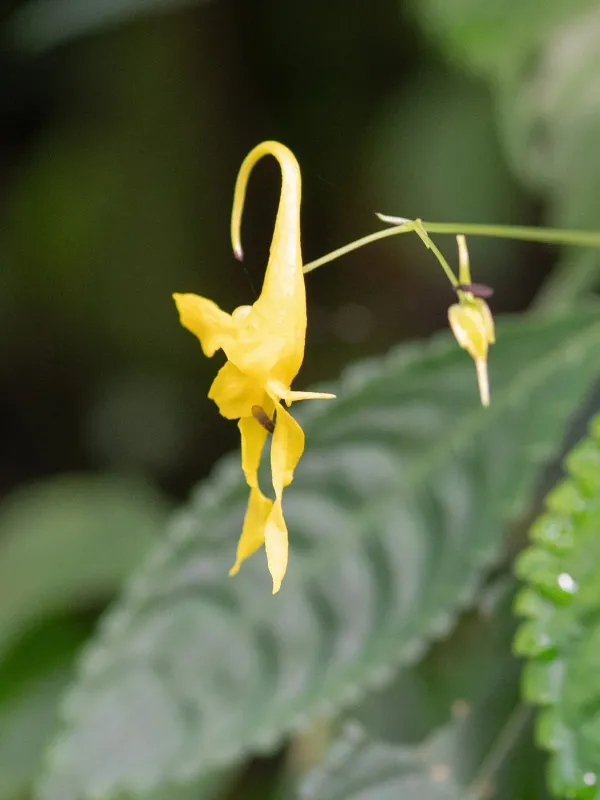
Description
Growing requirements
Impatiens drepanophora belongs to the Balsaminaceae family, a group of plants known for their succulent stems and vibrant, uniquely shaped flowers. This species is native to mountain forests in Southeast Asia, where it thrives in shaded and humid habitats.
The plant features delicate, semi-succulent stems that require careful handling. Its foliage is typically lush, serving as a perfect backdrop for the characteristic spurred flowers that distinguish this species from other relatives in the Impatiens genus.
To cultivate this plant successfully, one must provide a rich, well-draining soil mix that remains consistently moist but never waterlogged. Incorporating organic matter such as peat or compost is recommended to ensure proper nutrient availability.
The ideal environment for this species is partial to full shade. Direct sunlight is detrimental to its health, as it causes leaf desiccation and severe stress to the plant's delicate vascular system, which is adapted to low-light conditions.
Temperature management is critical; Impatiens drepanophora prefers temperate climates and avoids temperature extremes. Maintaining high ambient humidity is also beneficial, mimicking the natural conditions of its forest origin.
Main diseases and pests
The primary threats to Impatiens drepanophora are fungal pathogens that thrive in high humidity and stagnant air. Powdery mildew is a common concern, manifesting as a white, dusty layer on the leaves that inhibits photosynthesis.
Root rot is another major issue caused by improper irrigation practices. Once the roots are compromised by waterlogging, the plant rapidly declines, making preventative drainage management essential for its survival.
Spider mites are the most frequent insect pests, especially in environments where humidity levels are inconsistent. They can cause significant damage by depleting the plant's resources through feeding on leaf cells.
Whiteflies can also infest the plants, particularly in greenhouse settings. Their presence often leads to the development of sooty mold on the leaves due to the honeydew they secrete during their feeding cycle.
Routine scouting and the implementation of an integrated pest management strategy are necessary to maintain healthy specimens and ensure that the plants reach their full decorative or scientific potential.