
Two-horned touch-me-not
Impatiens bicornuta
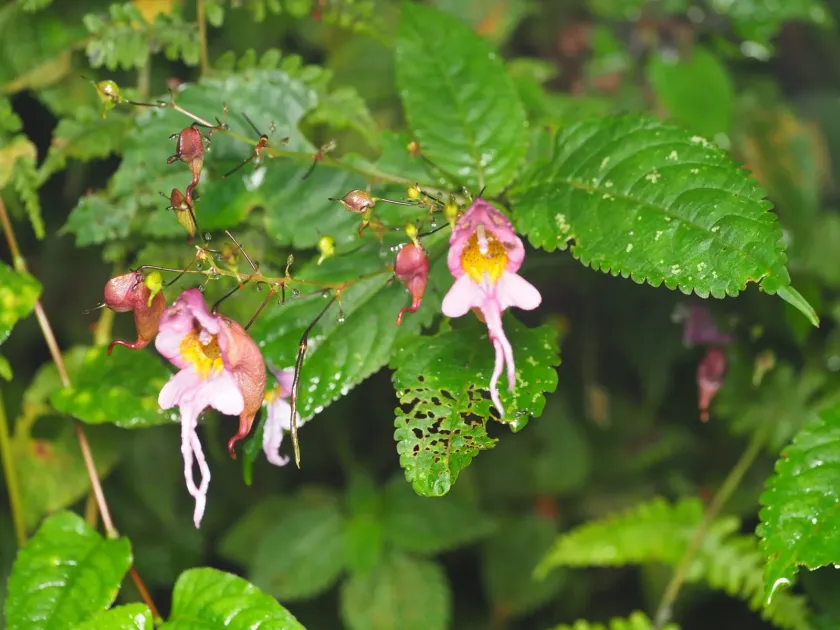
Description
Sowing dates
Impatiens bicornuta, a member of the Balsaminaceae family, is a herbaceous annual that requires careful propagation to ensure successful establishment. Seed sowing usually begins indoors in early spring.
The seeds should be sown on the surface of a light, moist starter mix. Since they require light for germination, they must not be buried deeply; a light dusting of vermiculite is sufficient.
After reaching a robust size, the seedlings should be hardened off before being transplanted outdoors. This transition period allows the plants to adapt to the fluctuations of the ambient garden environment.
Optimal spacing is essential, as Impatiens bicornuta tends to branch out and form dense foliage. Planting them 30 to 40 centimeters apart allows for adequate airflow and prevents moisture-related issues.
For direct seeding in warmer climates, wait until the soil has thoroughly warmed up and the risk of frost has completely passed to ensure a high germination rate and steady growth trajectory.
Growing requirements
This species thrives in partial shade or dappled light conditions. Protection from the intense midday sun is critical, as high solar radiation can easily damage the sensitive, succulent tissues of the plant.
The ideal growing medium is rich, humus-dense, and well-draining. While Impatiens love moisture, they do not tolerate "wet feet," so proper soil structure is vital to prevent root rot in container or bed settings.
Consistent irrigation is the cornerstone of its care. The soil must be kept evenly moist at all times; even brief periods of drought can cause the plant to wilt significantly and potentially drop its buds.
Frequent, diluted liquid fertilizing is recommended during the peak growing season to support the formation of its characteristic flowers and maintain deep, lush green foliage color.
Regular deadheading is an effective cultural practice. Removing spent flowers prevents the plant from diverting its energy toward seed production and encourages continuous blooming throughout the season.
Main diseases and pests
Gray mold (Botrytis) is a primary concern for Impatiens bicornuta, particularly in environments with poor air circulation or excessive overhead watering. Proper spacing helps mitigate this risk significantly.
Spider mites are common pests that flourish in hot, dry conditions. Keeping the plants hydrated and maintaining a humid microclimate can deter these pests from establishing large colonies.
Powdery mildew appears as a white, dusty growth on leaves. It is often triggered by cool nights followed by warm days, requiring prompt fungicide intervention to keep the foliage healthy.
Aphids often target new, succulent growth. Monitoring the tips of the stems regularly allows for early detection, which can often be managed with simple horticultural soaps or biological control.
Root rot is typically caused by overwatering or soil compaction. Ensuring that drainage holes in pots are not blocked and avoiding heavy garden soils is essential for the long-term health of the crop.