
Balfour's touch-me-not
Impatiens balfourii
Description
Sowing dates
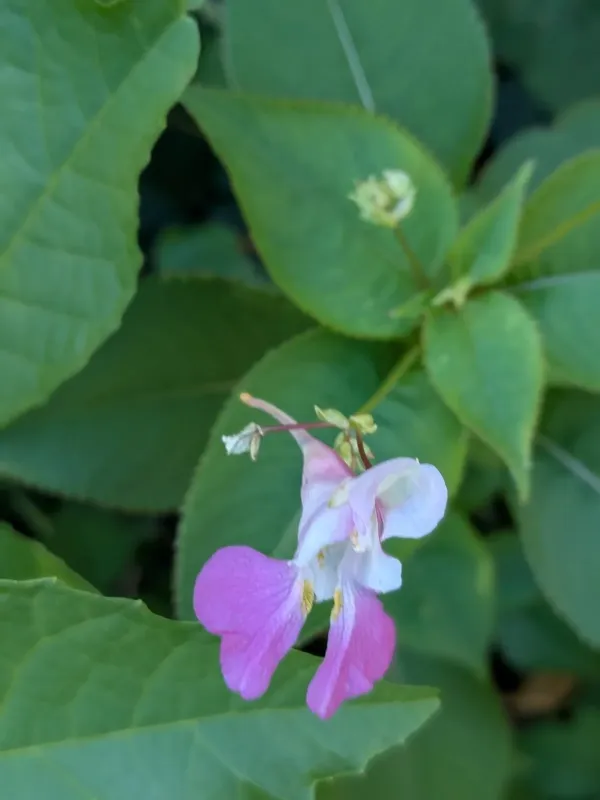
Balfour's touch-me-not (Impatiens balfourii) is a herbaceous annual belonging to the Balsaminaceae family. It is widely recognized for its rapid growth and attractive bi-colored flowers.
Seeds should be sown indoors in late winter or early spring, approximately 8 to 10 weeks before the last expected frost in your region.
The seeds require light to germinate, so they should be pressed into the soil surface without covering them with a thick layer of growing medium.
Maintaining a temperature range between 18 and 22 degrees Celsius ensures optimal germination rates. Seedlings should be kept in a well-lit area to prevent them from becoming leggy.
Transplanting into the garden takes place once the weather is consistently warm. It is crucial to harden off the seedlings by gradually exposing them to outdoor conditions before final planting.
Growing requirements
This plant thrives in partial shade or dappled sunlight. In hotter climates, providing protection from intense afternoon sun is essential for the plant's health.
The ideal soil is rich in organic matter, loose, and well-draining. Although they require consistent moisture, they do not tolerate waterlogged conditions that lead to rot.
Regular watering is necessary, especially during dry spells. However, it is advisable to water at the base of the plant to keep the foliage dry and prevent fungal issues.
For feeding, a balanced water-soluble fertilizer applied every two weeks during the growing season will support continuous blooming and robust development.
The plant grows to a height of about 60 to 90 centimeters, requiring adequate spacing to ensure good air circulation between individual specimens.
Main diseases and pests
Spider mites are the most significant pest, particularly in dry environments. They often colonize the undersides of leaves, leading to yellowing and premature leaf drop.
Powdery mildew can affect the plants if the air circulation is poor and humidity levels are too high. It appears as a white, dusty layer on the foliage.
Root rot and stem rot are common complications resulting from over-watering or poor soil drainage, which promote the proliferation of pathogenic fungi.
Management involves using neem oil or specialized organic fungicides to control pests and diseases without causing harm to beneficial garden insects.
Cultural control, such as removing infected parts of the plant immediately, is vital for maintaining the overall health of the flower bed.
Harvesting
The primary use of Balfour's touch-me-not is purely ornamental, serving as a versatile plant for shade borders, mixed containers, and woodland garden edges.
Seed collection is a delicate task as the seed capsules are explosive; they eject seeds upon the slightest touch when mature, making timely collection necessary.
As an annual, the plant completes its life cycle in one season. It is best removed from the garden after the first frost, leaving the area clean for winter.
The culture is highly valued for its ability to provide persistent blooms from mid-summer until autumn, offering a splash of color in areas with limited light.
While not traditionally harvested for industrial purposes, its ease of propagation makes it a favorite for gardeners looking to expand their collections annually.