
Japanese apricot
Prunus mume Siebold & Zucc.
Description
Growing requirements
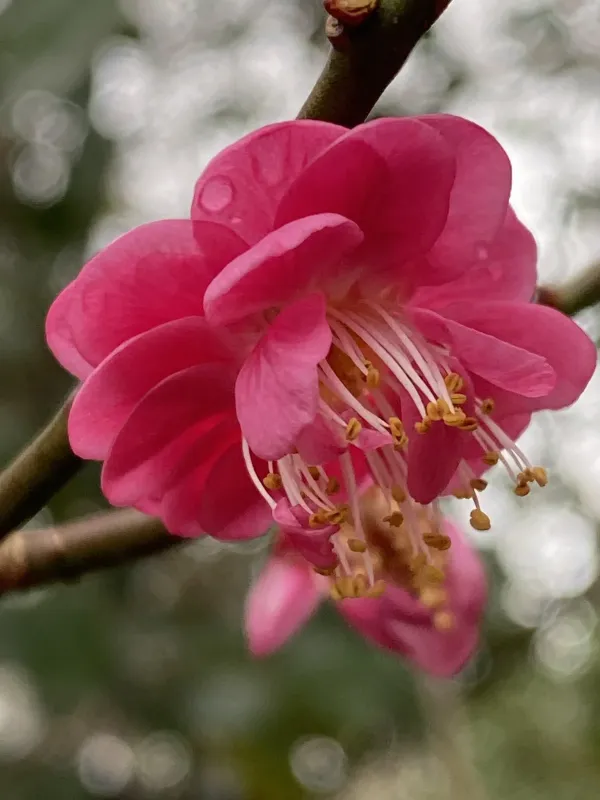
The Japanese apricot (Prunus mume), commonly known as Mume, belongs to the Rosaceae family. It is a highly valued deciduous tree recognized for its ornamental, fragrant flowers that bloom in late winter or early spring.
Native to East Asia, including China and Japan, the tree has been cultivated for centuries. It thrives in temperate to subtropical climates and is often grown as a garden feature due to its cultural significance and aesthetic appeal.
The tree requires a sunny location with fertile, well-draining soil. It is adaptable to various soil types but performs best in slightly acidic to neutral soil and must be protected from extreme, drying winds.
Proper maintenance includes regular pruning to keep the canopy open, allowing for light penetration and air circulation. Irrigation is essential during the fruit development stage, though the tree is relatively hardy once established.
The fruit is widely utilized in traditional Asian cuisine, particularly for making vinegar, liquor (umeshu), and pickled plums (umeboshi), which are prized for their unique tart profile and health benefits.
Main diseases and pests
The species is susceptible to various fungal pathogens, including brown rot and shot hole disease, which can significantly affect tree health and yield if humidity levels remain consistently high.
Common pests associated with this crop include the oriental fruit moth, aphids, and scale insects. These pests can weaken the tree by feeding on sap or damaging developing fruits, necessitating careful monitoring.
Effective pest and disease management involves a combination of cultural practices, such as pruning away infested growth, and the application of appropriate fungicides or insecticides when populations exceed thresholds.
Winter sanitation is crucial for managing disease; removing mummified fruits and leaf litter helps eliminate overwintering spores of fungi that threaten the tree in the following season.
Maintaining strong tree vigor through balanced fertilization and proper watering makes the Japanese apricot more resilient against opportunistic infections and localized pest outbreaks.