
European olive
Olea europaea L.
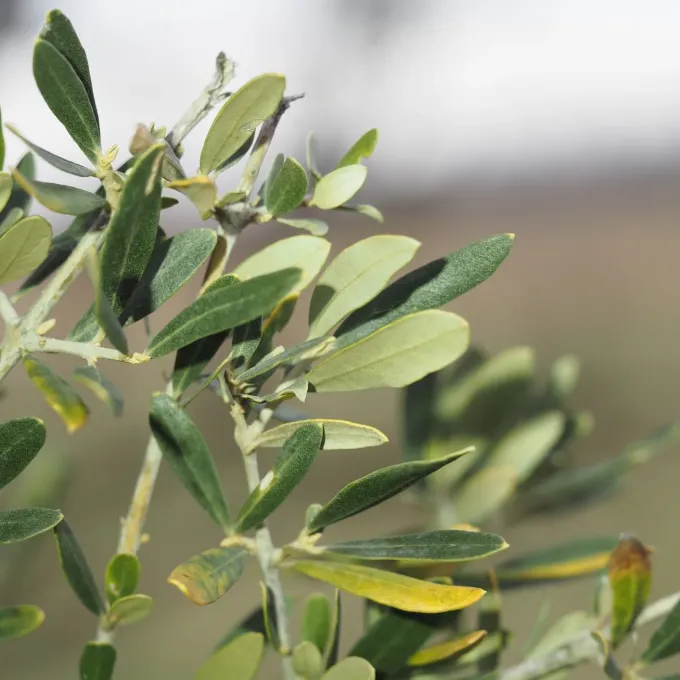
Description
Growing requirements
The European olive (Olea europaea L.) belongs to the Oleaceae family. It is a long-lived, evergreen tree that has been cultivated for millennia, originating from the Mediterranean basin and areas of the Middle East.
The species is perfectly adapted to climates with hot, dry summers and mild winters. It thrives in full sunlight and requires deep, well-draining soils that are slightly alkaline, often tolerating rocky and poor soil conditions better than most fruit crops.
Water management is critical during the fruit development phase. While olives are famous for drought tolerance, controlled irrigation is widely used in modern commercial orchards to ensure consistent fruit size and oil accumulation.
Cultural practices include systematic pruning to maintain an open canopy structure. This facilitates light penetration, improves airflow, and makes the application of protection treatments more effective throughout the season.
Beyond culinary use, the European olive is economically significant for the global production of virgin and extra-virgin olive oil, as well as cosmetic products derived from the plant's leaves and fruits.
Yield
Yield capacity depends heavily on the training system and the intensity of orchard management. Modern high-density planting systems can reach yields of 10 to 12 tons per hectare, significantly higher than traditional wide-spaced groves.
- Traditional extensive systems: 2–4 tons per hectare.
- Super-high-density systems: up to 15 tons per hectare.
Climatic stress, such as late spring frosts during the flowering period, can cause significant drops in annual yields, making site selection crucial for commercial success.
Main diseases and pests
The olive fruit fly (Bactrocera oleae) is the most economically damaging pest, requiring integrated pest management (IPM) to control populations without damaging the quality of the olive oil.
Fungal pathogens like Spilocaea oleaginea, causing peacock spot disease, thrive in humid conditions and can lead to significant leaf drop, reducing the tree's photosynthetic capacity and overall vigor.
Harvesting
The harvest timing is dictated by the intended use of the fruit. Green olives are typically picked earlier, whereas olives intended for oil extraction are harvested when they reach full maturity and peak oil content.
Harvesting techniques have evolved from manual hand-picking to mechanical shakers and straddle harvesters. Rapid processing after harvest is essential to prevent fermentation and ensure a high-quality end product.