
Purple kiwi
Actinidia purpurea Rehd.
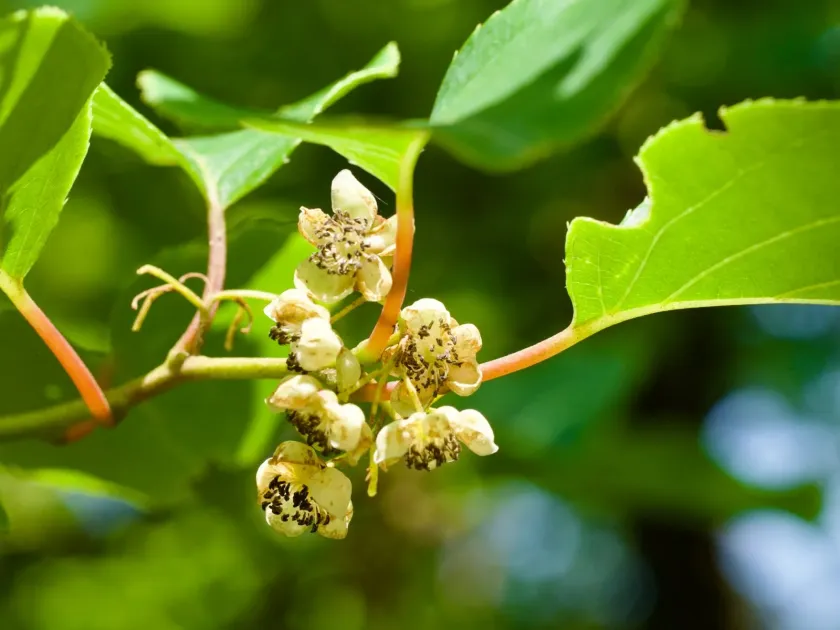
Description
Growing requirements
Purple kiwi (Actinidia purpurea) is a vigorous perennial woody vine belonging to the Actinidiaceae family. Native to the mountainous regions of China, this species thrives in protected forest environments where moisture and organic soil matter are abundant.
The plant requires well-drained, fertile soil with a slightly acidic to neutral pH. It is sensitive to waterlogging, so proper soil aeration and drainage systems must be established before planting in the garden or commercial orchard.
Climatic requirements involve moderate sunlight exposure, although young plants benefit from partial shade. It is crucial to shield the vines from strong, desiccating winds, which can easily damage the foliage and stunt the growth of the young shoots.
Regular maintenance is essential for high performance, including the installation of sturdy trellises or supports. Proper pruning is necessary to maintain vine shape, promote air circulation, and ensure that sunlight reaches the fruiting wood effectively.
Since it is a dioecious plant, growers must ensure that both male and female plants are present in the planting design. Cross-pollination is primarily facilitated by bees and other insects, which are vital for successful fruit set in a productive plantation.
Yield
The fruit of the purple kiwi is known for its distinctive reddish-purple skin and sweet, aromatic flesh. Yields typically begin to increase after the vines reach maturity, provided they are not stressed by extreme temperatures or nutritional deficiencies.
Main diseases and pests
The crop is generally robust but can be susceptible to fungal pathogens like leaf spot in high-humidity climates. Common pests include aphids and beetles that may feed on the foliage, requiring periodic monitoring and integrated pest management practices.
Harvesting
Harvesting usually occurs in late summer when the fruits soften slightly and develop their characteristic color. The fruit is highly valued for its dense concentration of vitamin C, fiber, and antioxidants, making it a popular choice for fresh consumption.