
Actinidia hemsleyana
Actinidia hemsleyana Dunn
Description
Growing requirements
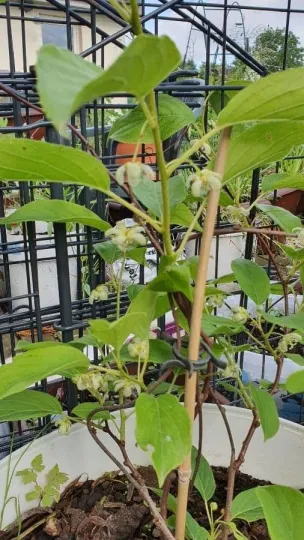
Actinidia hemsleyana is a woody climbing vine belonging to the Actinidiaceae family, naturally occurring in the subtropical regions of China. It typically inhabits moist forests and mountain valleys, where it utilizes surrounding trees as support to reach the canopy light, showcasing the classic growth habit of the genus.
The cultivation of this species requires a location that provides protection from direct, scorching sun and strong winds. The ideal soil profile for Actinidia hemsleyana consists of nutrient-rich, well-drained, and slightly acidic substrate, which must remain consistently moist throughout the active growing season.
Regarding climate, the plant thrives in mild temperate to subtropical conditions. It is essential to maintain high relative humidity around the plant, as excessive heat or dry air can cause significant stress, leading to leaf burn or premature senescence. Mulching is highly recommended to protect shallow roots.
Agrotechnical maintenance focuses heavily on structural support. As a climbing vine, it requires sturdy trellises or arbors to develop its full architectural potential. Pruning should be performed during the dormant season to manage growth density and remove dead or diseased shoots, ensuring structural integrity and plant health.
Economically, Actinidia hemsleyana is primarily valued as an ornamental specimen in botanical collections and specialized gardens due to its elegant foliage and distinct growth pattern. It serves as a focus for researchers studying the genetic diversity within the Actinidiaceae family to improve resistance traits in related commercial crops.
Main diseases and pests
The plant is susceptible to various fungal pathogens that flourish in environments with poor air circulation and excessive moisture. Furthermore, common pests, including leaf-eating caterpillars and spider mites, may impact the aesthetic and physiological health of the vine if the plants are not monitored regularly.