
Woolly kiwi
Actinidia eriantha Benth.
Description
Growing requirements
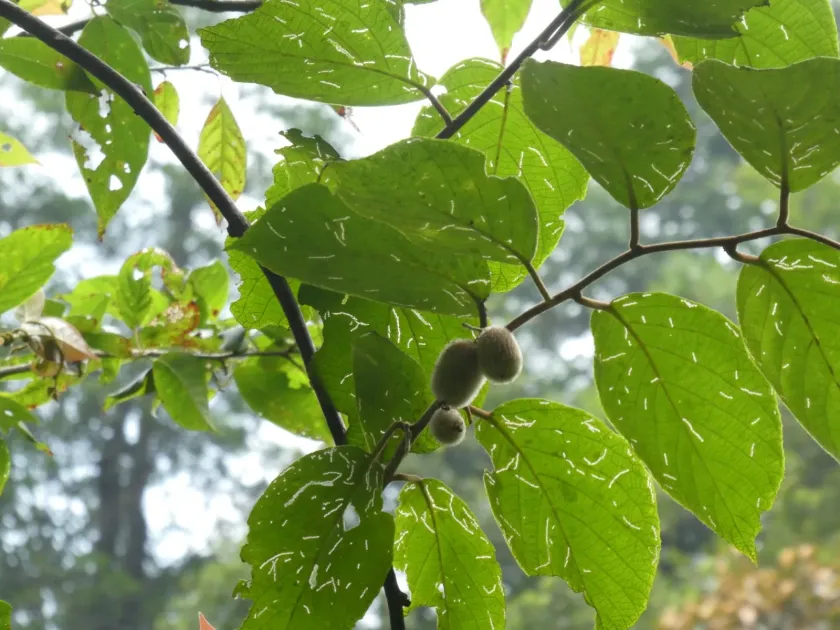
Actinidia eriantha, commonly known as woolly kiwi, is a woody climbing vine belonging to the Actinidiaceae family. It is native to the subtropical regions of Southern China, thriving in forest margins and mountainous areas where humidity remains consistently high.
The plant requires deep, well-draining, and nutrient-rich soil to support its vigorous growth. It performs best in slightly acidic to neutral soil types. Water management is critical; while the plant enjoys moisture, it cannot tolerate waterlogged conditions that lead to root rot.
Climate requirements for this species are specific: it prefers moderate temperatures and avoids extreme heat. In cooler regions, protection against late spring frosts is necessary, as young shoots are highly susceptible to cold damage and may lose the potential harvest for the season.
Agricultural practice revolves around the establishment of a strong trellis system. Because the vine grows rapidly during the season, pruning is essential for maintaining the shape, ensuring sunlight penetration to the center of the vine, and promoting fruit set.
Propagation is typically done through cuttings or layering to ensure the desired sex of the plants. As a dioecious species, orchards must be planted with a correct ratio of male to female vines to facilitate wind and insect-mediated cross-pollination.
Yield
The fruit of Actinidia eriantha is characterized by a dense, woolly coating and is highly prized for its nutritional value, containing significant amounts of vitamin C and fiber. Yield capacity increases as the vine matures and develops a dense branch network.
Commercially, the fruit is utilized in fresh markets and food processing industries. The specific flavor profile and storage potential make it an interesting candidate for niche fruit production in regions with suitable climates.
Main diseases and pests
Disease management focuses on preventing fungal infections such as leaf spot or powdery mildew. Good air circulation through regular pruning significantly reduces the risk of pathogens thriving on the foliage.
Common pests include mites and various caterpillars that feed on young succulent leaves. Integrated pest management strategies, focusing on biological control and early detection, are recommended for maintaining vine health.