
Sea lettuce
Ulva lactuca Linnaeus
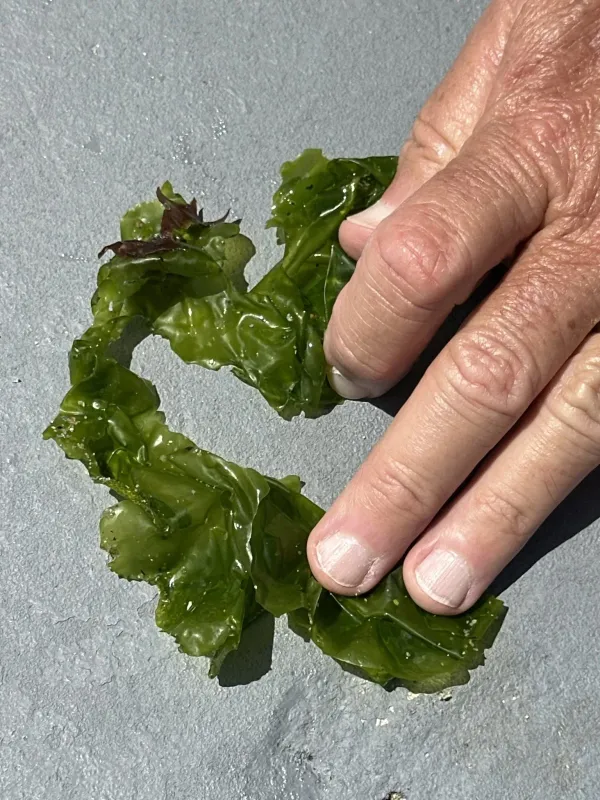
Description
Sowing dates
Sea lettuce, scientifically known as Ulva lactuca, is a member of the Ulvaceae family. Its cultivation relies on either natural settlement of spores on ropes and nets or controlled seeding processes in specialized basins.
The planting phase typically begins in early spring, as rising water temperatures stimulate cellular division. Providing a stable substrate, such as nylon ropes, is crucial for the effective attachment of the thallus.
In industrial algae farms, seeding involves placing fertile thalli in the water column to release spores that settle on provided substrates. This method ensures a uniform and dense growth pattern.
Controlled environments, such as Recirculating Aquaculture Systems (RAS), offer the advantage of year-round cultivation by manipulating light and temperature levels to suit the growth phase of the algae.
Maintaining optimal spacing between growing lines is vital to prevent overcrowding, which can cause light limitation and lead to a significant reduction in photosynthetic rates.
Growing requirements
Sea lettuce requires high light intensity for optimal growth. It is typically cultivated in shallow coastal waters or high-intensity illuminated tanks where light can penetrate the full thickness of the algae mats.
The ideal temperature for biomass accumulation is between 15°C and 20°C. While the species is hardy, temperatures exceeding 25°C often trigger stress responses, resulting in thallus disintegration.
Water salinity should remain within the range of 20 to 35 parts per thousand. Sea lettuce is highly efficient at absorbing dissolved nitrogen and phosphorus, making it an excellent crop for bio-remediation.
Maintaining a stable pH, ideally between 7.5 and 8.5, is necessary for proper development. Fluctuations in pH can disrupt enzymatic activities, slowing down the growth cycle of the crop.
Constant water circulation is mandatory to prevent the buildup of metabolic waste and to ensure that nutrients are consistently available for the algal cells at the center of the mats.
Yield
Sea lettuce is renowned for its rapid growth rate, with biomass doubling in a matter of days under ideal conditions. This makes it a highly sustainable and productive aquaculture crop.
Multiple harvests per season are standard in well-managed systems. The ability of the algae to regenerate from remaining fragments allows for a continuous harvest strategy throughout the peak growing season.
Biomass yield is directly proportional to nutrient availability and light intensity. Nitrogen-enriched environments can lead to massive yields, often exceeding that of traditional terrestrial crops.
Harvesting usually involves mechanical cutting or the total removal of nets once the biomass density reaches a pre-determined threshold, ensuring maximum output per surface area.
Post-harvest weight loss can occur due to dehydration, so prompt processing or storage is essential to maintain the quality and the nutritional value of the raw seaweed.
Main diseases and pests
The primary threats include epiphytic algae and microorganisms that cover the thallus, inhibiting photosynthesis and significantly reducing the overall quality of the final product.
Grazing by marine invertebrates, such as small crustaceans and gastropods, can cause significant damage to the delicate leaf-like structures of the sea lettuce, leading to yield loss.
Bacterial diseases often appear as soft, bleached patches on the thallus, usually triggered by poor water quality, overcrowding, or stagnant conditions within the farming system.
Harmful algal blooms (HABs) in the surrounding waters can introduce toxic compounds that either kill the crop or render it unsafe for human or animal consumption.
- Regular cleaning of the culture structures.
- Water quality monitoring and nutrient balancing.
- Isolation of infected units to prevent cross-contamination.
Harvesting
The harvest period is critical and must occur before the algae reach the reproductive stage, where it would naturally start to release spores and potentially disintegrate.
After collection, the seaweed undergoes a thorough washing process to remove salt, sand, and accidental marine debris, followed by grading based on leaf size and general condition.
The versatile nature of sea lettuce allows it to be utilized in various sectors, including human nutrition, pharmaceutical extraction, and as a high-protein ingredient in aquaculture feeds.
Proper storage involves chilling or flash-freezing the biomass to lock in nutrients. Drying is another common method used to increase the shelf life for global export markets.
Sustainability in harvesting is achieved by leaving enough residual biomass for natural re-growth, which significantly reduces the need for frequent re-seeding of the farming sites.