
Pyropia tenera
Pyropia tenera (Kjellman) N.Kikuchi, M.Miyata, M.S.Hwang & H.G.Choi
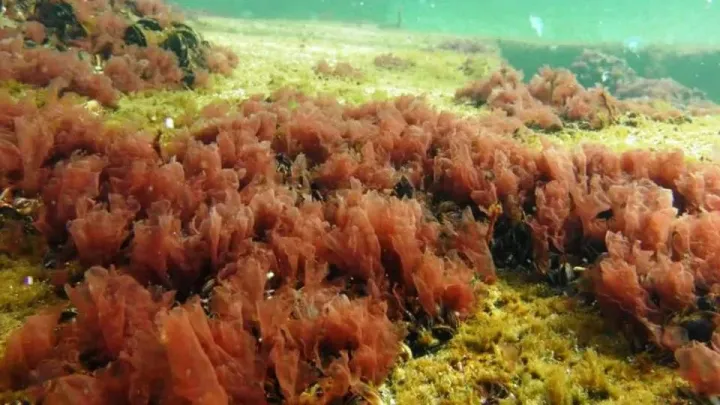
Description
Sowing dates
The life cycle of Pyropia tenera includes a conchocelis stage that typically develops on calcareous substrates. In industrial mariculture, seeding occurs by transferring spores onto specialized nets installed in coastal marine waters.
Optimal timing for cultivation initiation depends on water temperature and solar activity. In East Asian regions, this process usually begins in autumn when water temperatures drop to levels suitable for spore germination.
Substrate preparation is a critical step requiring sterility and control over spore settlement density. Farmers utilize automated systems to evenly distribute spores across the nets, ensuring high crop density.
Once spores are fixed on the nets, these are placed in shallow bays on specialized frames. The growth of the thallus from microscopic to commercial size takes several months under constant monitoring of hydrochemical parameters.
Seasonality is a determining factor: seeding too early in warm water leads to spore mortality, while late seeding results in stunted growth due to limited daylight hours during the winter period.
##requirements##Pyropia tenera belongs to the Bangiaceae family and requires specific environmental conditions for successful vegetative growth. The most critical factor is water salinity, which must be maintained within the range of 25 to 32 parts per thousand.
Temperature requirements are strict: optimal growth is observed at water temperatures between 5 and 15 degrees Celsius. Rising temperatures above 20 degrees often lead to thallus degradation and the development of unwanted epiphytes.
High light intensity is essential for active photosynthesis, so nets are positioned in the upper layers of the marine environment. Water transparency directly correlates with biomass growth rates and final product quality.
The availability of nutrients, especially nitrogen and phosphorus compounds, is a limiting factor in intensive culture. In regions with low nutrient content, supplementary fertilization methods may be used, though focus is usually placed on selecting sites with natural currents.
Currents ensure a constant supply of fresh, oxygen-rich water, preventing stagnation and the accumulation of metabolites. Expert site selection based on hydrodynamics is the key to successful seaweed farming.
##yield##The yield of Pyropia tenera is measured in kilograms of dry or fresh biomass per meter of net. By following proper agrotechnical norms, farmers can achieve multiple harvests within a single production cycle.
The first harvest occurs when thalli reach 15–20 cm in length, allowing the plant to regenerate quickly for subsequent harvests. Harvest intensity is regulated based on population health to prevent nutrient depletion in the cells.
Modern processing methods allow for the mechanization of the harvesting process. Specialized mariculture harvesters cut the seaweed directly in the water, minimizing damage to the main part of the thallus and ensuring high raw material purity.
Average yield depends on the genetic potential of the specific strain used. Breeding varieties resistant to temperature fluctuations and diseases is a key focus for increasing overall maritime productivity.
Effective management of planting density allows for space optimization. Overly dense growths lead to competition for light and nutrients, reducing product quality and leading to premature aging of the algae.
##threats##The main threat to the crop comes from pathogenic fungi and bacteria that cause "bleaching disease" of the thallus. Infections spread rapidly when optimal temperature regimes are violated or planting density is too high.
Epiphytic algae act as serious competitors for space and nutrients. Infestation by epiphytes can lower the market value of the crop to critical levels, as cleaning the thallus of impurities is extremely difficult.
Pests, such as small crustaceans, can graze on the Pyropia thallus, causing mechanical damage. Prevention includes periodic relocation of nets and adherence to strict harvesting schedules to break the pest breeding cycle.
Climate change and ocean acidification pose new challenges for producers. Constant monitoring of water pH levels is becoming a necessity to prevent mass crop loss in the future.
Marine pollution, including heavy metals and industrial runoff, negatively affects product quality. Safety standards require strict control of farming locations and regular chemical analysis of water composition.
##harvest##Harvesting is the culmination of the production process, requiring precision and speed. The optimal time for harvest is determined visually by changes in thallus color and the attainment of commercial dimensions.
Freshly harvested raw materials are immediately sent to coastal stations for primary processing. It is crucial to avoid overheating and oxidation, so the time from harvest to processing is kept to a minimum.
Primary processing involves thorough washing with seawater to remove sand, small mollusks, and other mechanical contaminants. Purity of the raw material is the main quality criterion for the food industry.
Subsequent use of the crop involves shredding and sheet formation, followed by controlled drying. The resulting product, widely known as nori, is a valuable food ingredient rich in protein and micronutrients.
Storage of the finished product requires airtight packaging and protection from moisture. Adherence to these conditions preserves the unique taste and beneficial properties of Pyropia, ensuring stable sales throughout the year.