
Butterbur
Petasites hybridus (L.) Ph. Gärtn. B. Mey. et Scherb.
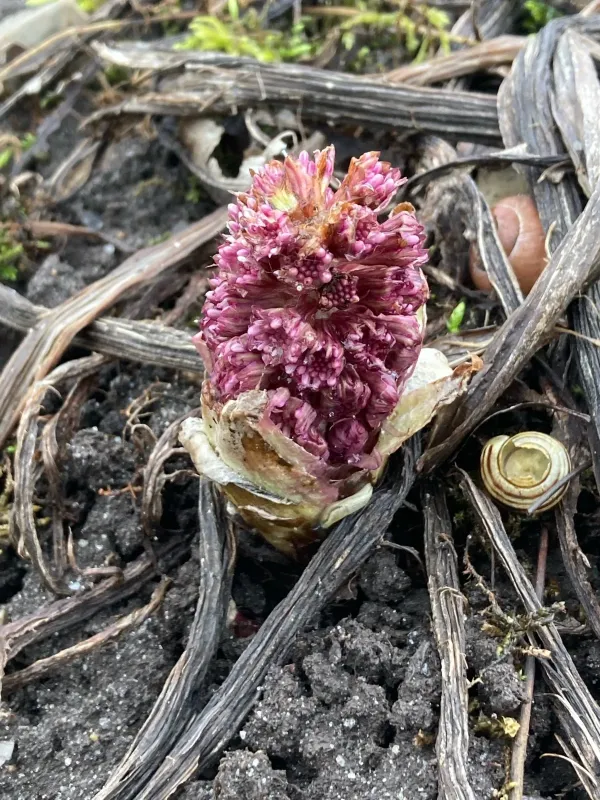
Description
Growing requirements
Butterbur (Petasites hybridus) is a robust perennial plant belonging to the Asteraceae family. It is native to various regions of Europe and Western Asia, where it thrives in moist, riparian environments and shady woodland areas.
The cultural success of this plant is heavily dependent on soil moisture. It prefers deep, nutrient-rich, and heavy soils that do not dry out during the summer. It is an ideal plant for wetlands, pond margins, or areas with poor drainage that would be unsuitable for other crops.
In terms of light, Butterbur is highly shade-tolerant. It performs exceptionally well in woodland clearings or beneath large trees, where its massive foliage can spread without competition from sun-loving species.
Cultivation requires careful planning due to its rhizomatous growth habit. The plant spreads aggressively through underground runners, making it necessary to provide ample space or install root barriers to prevent it from invading neighboring beds.
Biologically, it is a spring ephemeral. The plant produces dense spikes of purple or pink flowers very early in the year, long before the iconic heart-shaped leaves appear. These leaves can reach enormous sizes, acting as a natural mulch for the soil underneath.
Harvesting
The primary horticultural interest in Butterbur lies in its medicinal properties. Rhizomes are typically harvested in the late autumn or very early spring, cleaned, and dried at low temperatures to ensure the preservation of active compounds.
Leaves are collected in mid-summer. Proper harvesting techniques involve selecting healthy, fully grown leaves and immediately drying them in well-ventilated, shaded areas to prevent oxidation and loss of quality.
The plant has long been used for its anti-spasmodic effects. Modern research focuses on the extraction of petasin and isopetasin, which are key components in pharmacological treatments for migraine prevention and respiratory conditions.
For landscape professionals, Butterbur is a top-tier choice for ground cover in difficult, damp, and shaded sites. Once established, it requires almost zero maintenance beyond seasonal clearing of dried foliage in late autumn.
While generally hardy, the plant should be monitored for common pests such as slugs and snails, which are attracted to the soft, large leaf surfaces during humid periods. Ensuring good airflow within the patch helps mitigate any risk of fungal foliage diseases.