
Japanese butterbur
Petasites japonicus (Siebold & Zucc.) Maxim.
Description
Sowing dates
Japanese butterbur (Petasites japonicus), commonly known as fuki, is a rhizomatous perennial plant belonging to the Asteraceae family. It is recognized for its fast-growing root system, which allows it to colonize wet habitats effectively.
Propagation is typically achieved through rhizome division. The optimal time for planting is early spring, before the leaves start to expand, or in late autumn, allowing the plants to establish roots before the winter dormancy period.
Rhizome segments should be planted 10 cm deep into moist soil. Because the plant spreads via underground runners, providing sufficient space is critical for long-term health and easier management of the plantation.
Native to East Asia, including Japan, Korea, and China, the species thrives in riparian zones, wetlands, and shaded forest edges where the soil is rich in organic matter and consistently moist.
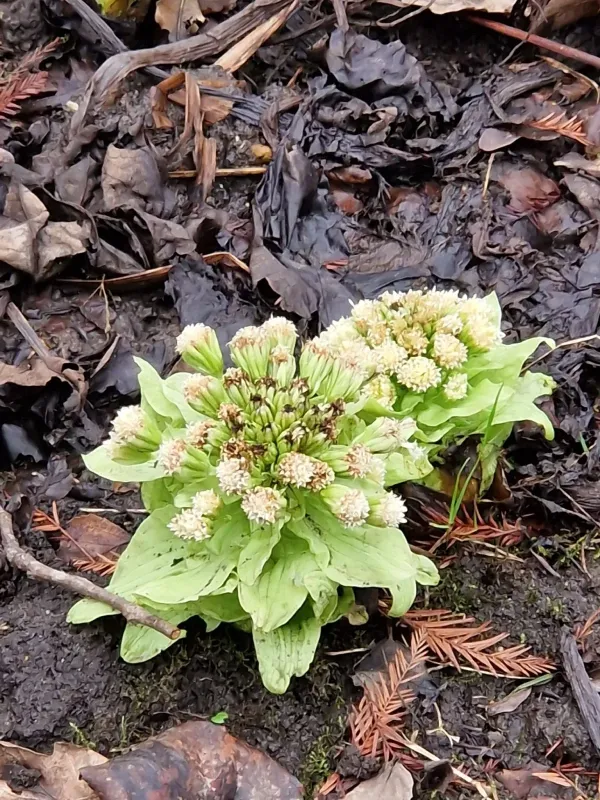
The plant has a unique botanical cycle: it produces flower stalks in very early spring, followed by large, heart-shaped leaves on long, fleshy petioles that can reach lengths of over one meter in favorable conditions.
Growing requirements
Consistent soil moisture is the primary requirement for successful Japanese butterbur cultivation. The plant is a hydrophyte by nature and will quickly wilt if exposed to extended periods of soil dryness.
The ideal soil type is a deep, fertile, loamy soil with a neutral to slightly acidic pH. High organic matter content is beneficial, as it promotes the rapid vegetative growth required for high-yield harvests.
While Japanese butterbur is shade-tolerant, it grows most vigorously in areas with partial shade or high atmospheric humidity. Full sun exposure is acceptable only if the irrigation system is extremely reliable.
It is a cold-hardy plant, though mulching during the first winter in colder climates helps protect the rhizomes. Proper drainage is necessary to prevent rot during the dormant winter phase.
Basic agrotechnical practices include weed control in the initial stages and regular organic fertilizing. Once the stand is established, its thick foliage usually outcompetes most invasive weeds in the area.
Main diseases and pests
The main pathological threats include powdery mildew and leaf spot diseases, which are exacerbated by high humidity and poor air circulation within dense patches of the crop.
Slugs and snails are the most significant insect pests, as they feed voraciously on the tender young leaves and petioles during the spring. Implementing manual or biological pest control is essential.
Over-saturation of soil without adequate drainage can trigger fungal infections in the rhizomes. Crop rotation or site selection is key to minimizing these soil-borne risks.
Regular monitoring of the leaf undersides for signs of aphid infestation is recommended. Early detection allows for localized treatments that protect the marketability of the crop.
Maintaining a balanced plant density prevents many of these issues, as it promotes better drying of the leaf surfaces after rainfall and improves overall plant health.
Harvesting
The primary economic use of Japanese butterbur is the consumption of its petioles (stalks), which are prepared in various culinary styles, often after boiling to remove natural bitterness.
Harvesting should be performed when stalks are at their peak tenderness, typically in mid-to-late spring. Stalks are cut at the base, ensuring that the central growing point remains intact to support the plant.
Flower buds are also prized as a seasonal delicacy and are harvested early, just as they begin to emerge from the ground. These are used in tempura or pickled dishes for their unique texture.
Yields increase as the plant matures. After 4–6 years, productivity may decline due to overcrowding, at which point the rhizomes should be divided and replanted to rejuvenate the crop.
Post-harvest handling involves keeping the produce cool and hydrated, as the succulent petioles are prone to quick water loss and wilting if not stored in a moist environment.