
Bassia prostrata
Bassia prostrata (L.) A. J. Scott
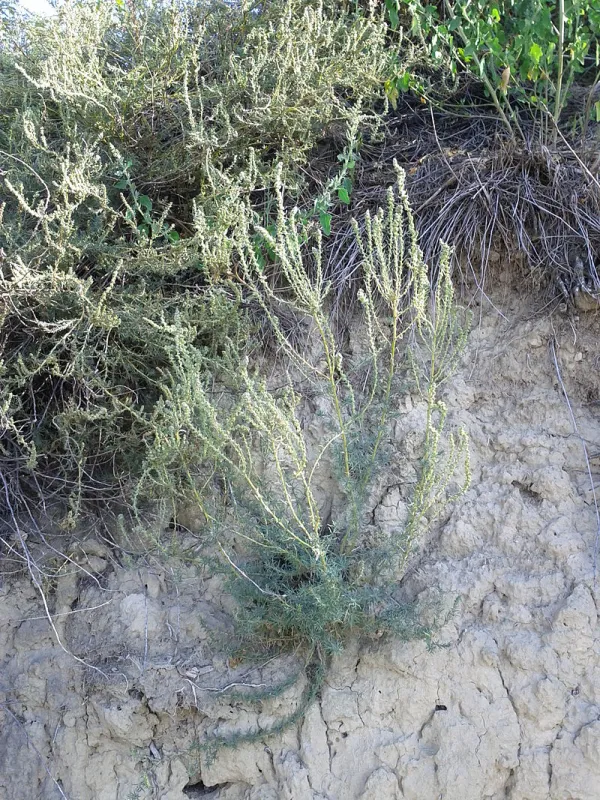
Description
Sowing dates
Bassia prostrata, commonly known as forage kochia, is a perennial semi-shrub belonging to the Amaranthaceae family. It is widely recognized as a crucial plant for restoring degraded rangelands and providing high-quality forage in arid and semi-arid environments.
Sowing is typically conducted in early spring as soon as the soil is workable to take advantage of residual winter moisture. Early planting is vital for establishing a deep root system before the onset of summer heat and drought conditions.
In some regions, dormant late-autumn or winter seeding has proven successful, allowing the seeds to germinate naturally when conditions become optimal in early spring. Seeds should be planted at a shallow depth of 1–2 cm and rolled to ensure good soil-to-seed contact.
Growth during the first year is notably slow, requiring growers to minimize weed competition. Proper site preparation and the potential use of selective herbicides can significantly enhance the success rate of new stand establishment.
Seeding rates vary depending on the intended use and environmental conditions. For typical pasture enhancement, rates generally range from 4 to 6 kg/ha when using row-seeding methods, ensuring a uniform distribution across the field.
Growing requirements
Forage kochia is highly regarded for its exceptional drought tolerance and ability to thrive on alkaline and saline soils where many other plants fail. It is a true xerophyte, perfectly adapted to harsh, water-limited environments.
The plant performs best in areas with high solar radiation and good soil aeration. It does not tolerate prolonged waterlogging or high-shade environments, making well-drained, open sites the ideal choice for its cultivation.
Soil pH should ideally be neutral or slightly alkaline, reflecting the natural habitat of the species. It is remarkably resilient to soil salinity, making it an excellent candidate for reclaiming degraded lands with high salt content.
While the crop is hardy, providing balanced mineral nutrition, particularly nitrogen, during the establishment phase can boost growth. However, excessive fertilization is unnecessary and can sometimes reduce the plant's natural resilience to environmental stress.
Ongoing maintenance involves managing livestock grazing to allow for periods of vegetation recovery. Proper management ensures the longevity of the stand, allowing the plant to reach its full potential for biomass production over many years.
Yield
The biomass yield of Bassia prostrata is highly dependent on local moisture levels and soil quality. Under favorable conditions, dry matter yields can range between 15 and 30 centners per hectare, providing consistent fodder throughout the season.
The nutritional value peaks during the late budding and early flowering stages. During this time, the plant provides a high-protein diet, which is especially beneficial for sheep, goats, and cattle during the dormant grazing season when other grasses are dried out.
Integrating forage kochia into rangelands significantly enhances the carrying capacity of the land. Its deep root system not only produces forage but also plays a critical role in stabilizing soil and preventing wind and water erosion.
Yield stability is maintained through proper stand density management. Because the plant is capable of natural reseeding, well-managed stands often persist for decades, offering a cost-effective solution for permanent pasture improvement.
For seed production purposes, plots should be excluded from grazing. Harvesting seeds requires careful timing, as they can shatter easily upon reaching full maturity. Monitoring the plants closely during the late summer is essential for successful collection.
Main diseases and pests
Forage kochia is generally resistant to most common plant diseases. However, in excessively damp or humid conditions, the risk of fungal pathogens like powdery mildew or root rots increases, emphasizing the need for proper site selection and drainage.
Specific insect pests may target seeds and flower heads, potentially impacting seed yield. Integrated pest management strategies, including monitoring and appropriate insecticide applications, are recommended only when economic thresholds are surpassed.
Young seedlings are vulnerable to soil-dwelling pests like wireworms, which can devastate newly established stands. Scouting for these insects prior to sowing is a vital step in ensuring a successful crop start.
Weed competition remains the primary threat during the establishment phase. Utilizing mechanical weeding between rows or authorized selective herbicides is often necessary to help the young kochia plants gain dominance over invasive weeds.
Good agricultural practices, such as rotating grazing and avoiding overgrazing, prevent the soil from becoming exposed, which reduces the chance of weed infestations and helps maintain overall stand health.
Harvesting
Harvesting for seed is best performed using standard harvesting equipment when the majority of the seeds are ripe and have turned a brownish color. Care must be taken to adjust settings to prevent crushing the fragile seeds.
When harvesting for hay, it is essential to cut the crop before the stems become overly lignified. Early harvesting ensures that the resulting fodder retains high nutritional value and remains palatable to livestock.
Post-harvest management of seeds involves immediate drying to a moisture level below 12% and thorough cleaning. Storing seeds in cool, dry conditions is crucial to maintain high germination rates for future planting seasons.
Hay bales should be stored under cover or in well-ventilated stacks to prevent moisture accumulation, which could lead to spoilage or molding. Protecting the quality of the harvest is essential for feeding livestock throughout the winter months.
Grazing management is the final step in harvesting the biomass. Rotating livestock between different sections of the field prevents overgrazing and ensures that the forage kochia plants have enough time to regrow after each grazing event.