
Five-horn smotherweed
Bassia hyssopifolia (Pall.) Kuntze
Description
Growing requirements
Bassia hyssopifolia, commonly known as five-horn smotherweed, is an annual herb belonging to the Amaranthaceae family. It is a specialized halophyte, evolutionarily adapted to thrive in highly saline environments where soil salinity levels exceed the tolerance of most crops.
The native range of the species covers Central Asia, the Caucasus, and parts of Eastern Europe. It is frequently found in desert landscapes, salt marshes, and areas with degraded soil, demonstrating a remarkable ability to survive in harsh, arid climates.
The crop does not require nutrient-rich soil; it performs best in loose, alkaline, or salty substrates. Its ability to tolerate low soil moisture and high temperature fluctuation makes it a potential candidate for land reclamation in saline-affected areas.
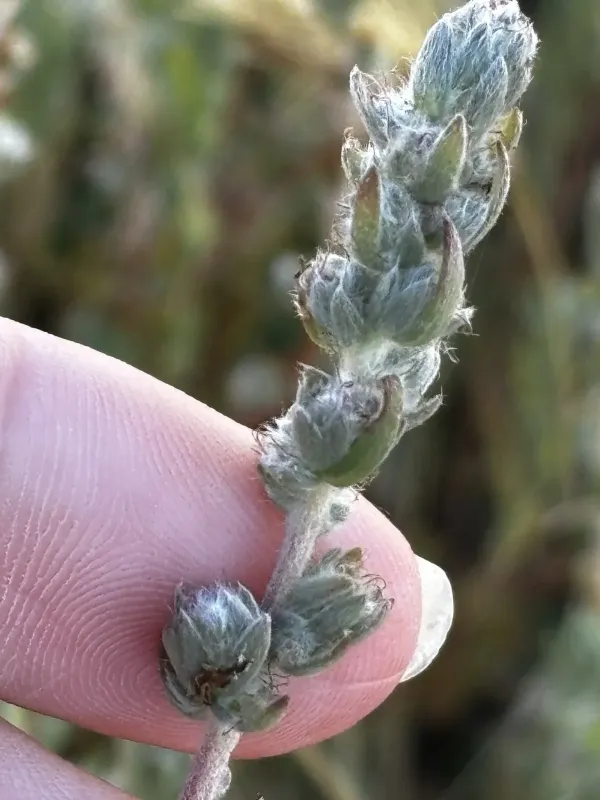
Botanically, it forms a branched, hairy stem reaching heights of 20 to 80 cm. The leaves are typically linear to lanceolate, which helps in reducing transpiration, a vital adaptation for surviving under the scorching sun of its native habitats.
The agricultural use of this plant is primarily focused on extensive grazing systems. It provides essential forage for livestock, particularly sheep and camels, during the dry seasons when other sources of green feed are unavailable.
Main diseases and pests
Bassia hyssopifolia is notably resistant to most common agricultural pathogens. Its survival strategy involves a strong physiological response to environmental stress, which often limits the susceptibility to conventional fungal or bacterial infections.
However, the plant can be infested by specific insect pests, including beetles and certain bugs that feed on the soft tissues during the early developmental stages. In natural pasture conditions, these pests are usually kept in check by natural predators.
Fungal diseases are rare but can occur in scenarios of prolonged humidity or poor drainage. In such cases, root rots or stem blights may manifest, though they rarely lead to total crop failure due to the plant's robust nature.
Viruses and nematodes are not considered major threats for this species. Its natural hardiness against abiotic stressors typically correlates with a high level of vigor in the face of biotic threats common to the region.
Effective management involves maintaining healthy population densities on pastures. Avoiding overgrazing is the most important measure, as it preserves the integrity of the soil and protects the plant from secondary pests that exploit weakened flora.