
Common asparagus fern
Asparagus setaceus (Kunth) Jessop
Description
Growing requirements
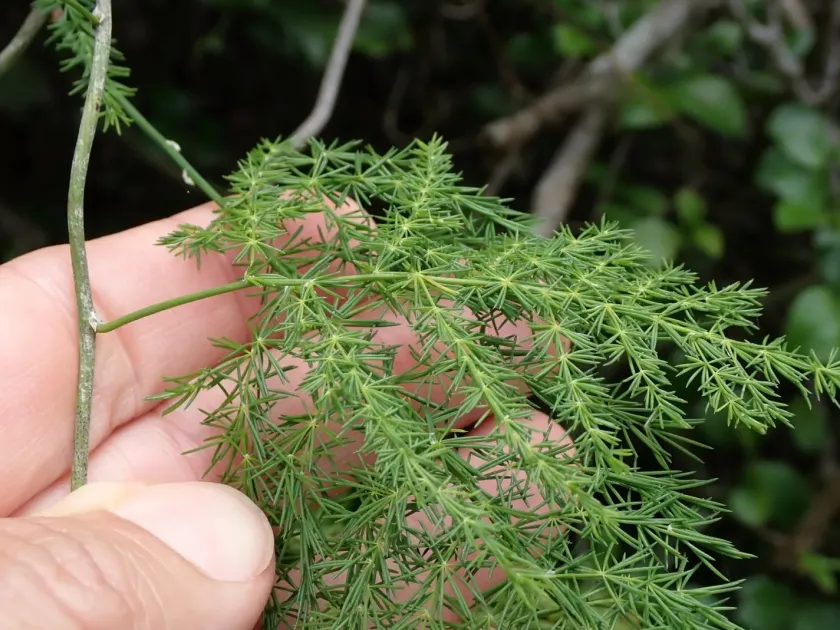
The Common asparagus fern (Asparagus setaceus) belongs to the Asparagaceae family. It is a perennial climber known for its delicate, needle-like cladodes, which give the plant its characteristic feathery appearance.
Native to Southern and Eastern Africa, this plant thrives in diverse habitats ranging from forest margins to thickets. In cultivation, it is prized for its ornamental value in floristry and as a popular indoor plant worldwide.
Asparagus setaceus requires bright, indirect sunlight to maintain its vibrant green color. While it can adapt to lower light levels, it grows most vigorously in a filtered light environment where it can develop a dense canopy.
Temperature management is critical for this species; it prefers a stable environment between 18 and 25 degrees Celsius. It should be kept away from heating vents and air conditioning drafts, which can cause severe dehydration.
The substrate must be well-draining, nutrient-rich, and slightly acidic. A mix of peat moss, pine bark, and perlite provides the necessary aeration for the root system, preventing the suffocation often caused by compacted soils.
Main diseases and pests
Spider mites and scale insects are the primary pests affecting Asparagus setaceus. These pests thrive in dry environments and can cause rapid yellowing and premature dropping of the foliage if left unchecked.
Root rot, triggered by overwatering, is the most common disease. Once the root system is compromised by anaerobic conditions, the plant's ability to uptake water and nutrients is permanently damaged, leading to widespread necrosis.
Effective pest management involves regular misting to increase humidity and the occasional use of insecticidal soap or horticultural oils. Systemic treatments should be used only in cases of heavy infestation.
To prevent disease, it is essential to allow the soil to dry out slightly between waterings. Maintaining good air circulation in a greenhouse or room setting significantly reduces the risk of fungal infections.
Nutritional deficiencies often manifest as yellowing of the cladodes. Providing a balanced, water-soluble fertilizer throughout the growing season ensures the plant remains vigorous and resistant to potential infections.