
Asparagus retrofractus
Asparagus retrofractus L.
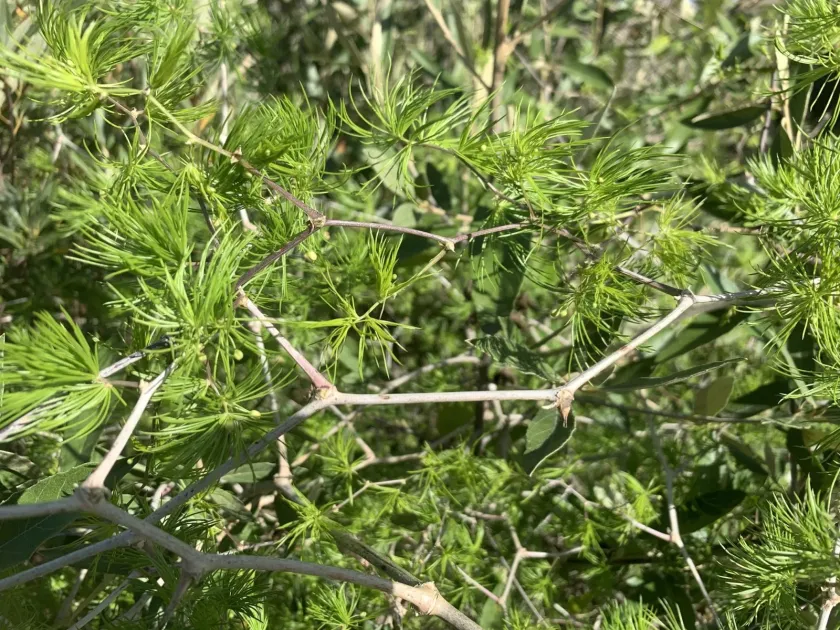
Description
Growing requirements
Asparagus retrofractus L., belonging to the Asparagaceae family, is a perennial evergreen plant native to South Africa, recognized for its unique zigzag-shaped stem structure.
The plant thrives in bright, indirect light conditions, as direct sunlight can cause leaf scorch and damage the delicate, needle-like foliage that characterizes this species.
Climate requirements include stable moderate temperatures, ideally between 20°C and 25°C during the growing season, while keeping it cooler in the winter months.
Cultivation requires well-draining, nutrient-rich soil with a neutral or slightly acidic pH to ensure the roots remain healthy and free from stagnation.
Economically, this species is highly valued in the floral industry, serving as an excellent filler for high-end arrangements due to its distinct, architectural appearance.
Main diseases and pests
The most frequent pests attacking this plant are spider mites and scale insects, which often thrive in environments with low air humidity.
Effective pest management involves using targeted insecticides and maintaining higher local humidity levels through frequent misting of the plant foliage.
Root rot is the primary disease risk associated with improper watering practices, necessitating a strict adherence to drying out the topsoil between waterings.
To prevent disease spread, it is essential to ensure adequate airflow around the plant, which discourages the growth of harmful fungi and bacteria.
Regular inspections of the foliage and root zone during seasonal maintenance are critical for early detection and prevention of potential biological threats.