
Acer amplum
Acer amplum
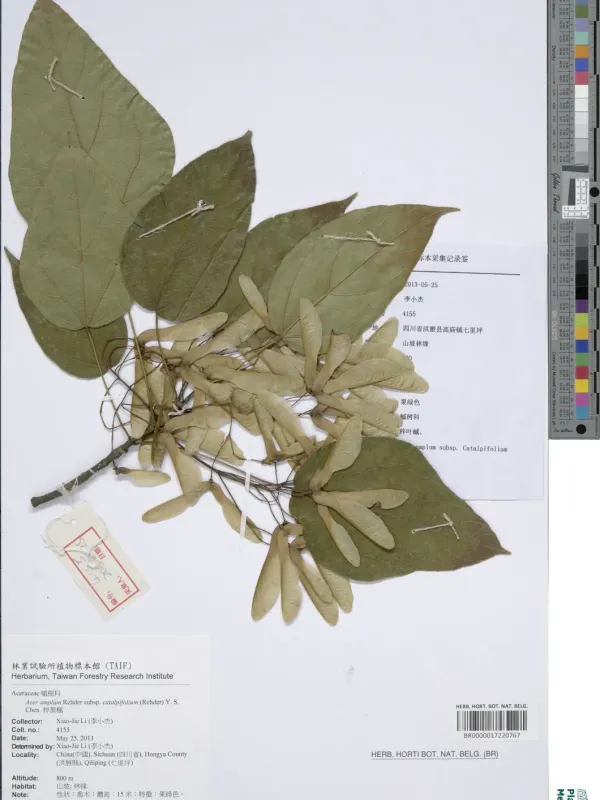
Description
Sowing dates
Propagation of Acer amplum is primarily performed using seeds. The species requires a cold stratification period to break embryo dormancy and achieve a successful germination rate in the spring.
Direct autumn sowing is the most effective method, as it mimics natural conditions and allows the seeds to undergo stratification naturally in the soil during winter months.
For spring sowing, seeds must be artificially stratified for 90 to 120 days at temperatures ranging between 1°C and 5°C. This ensures that biochemical processes within the seed are fully prepared for growth.
Seeds should be sown at a depth of 2–3 centimeters in well-drained, porous seedbeds. Careful monitoring of moisture levels is crucial during the germination phase to prevent both dehydration and fungal damping-off.
Young seedlings benefit from shading during the first summer to protect them from excessive heat, promoting steady root establishment before their first full winter season.
Growing requirements
Acer amplum belongs to the Sapindaceae family. It is a deciduous tree native to mountainous regions of China, often found growing in temperate mixed forests with stable humidity levels.
The tree thrives in cool to moderate climates and prefers sites with protection from strong, desiccating winds. It is relatively cold-hardy, although it prefers moderate temperature ranges.
Soil requirements include deep, fertile, and well-drained loamy textures. While the species can adapt to various soil types, it performs best in neutral to slightly acidic pH conditions.
Water management is vital during the juvenile stage. Regular, deep irrigation is necessary to support root development, whereas established trees are more drought-tolerant but still benefit from occasional deep watering during extreme heat.
In landscape applications, Acer amplum should be planted in areas providing adequate space for its natural branch structure and root system to expand fully over time.
Main diseases and pests
Common pathological issues in Acer amplum include powdery mildew, which manifests as a white, dusty layer on the leaves, particularly in damp and crowded planting conditions.
Verticillium wilt remains one of the most critical diseases for maples. It causes sudden wilting and leaf drop, often affecting only one side of the tree initially as it obstructs the vascular system.
Pest attacks from various aphids and leaf-eating beetles can defoliate trees if left unmanaged. Integrated pest management, including monitoring and using biological controls, is highly recommended.
Environmental stress, such as soil compaction or waterlogging, significantly predisposes the tree to secondary infections and long-term decline in vigor.
To maintain tree health, pruning should be conducted during the dormant season to minimize sap loss and prevent the spread of pathogens through fresh wounds on the wood.