
Mexican Engelmann spruce
Picea engelmannii Engelm. var. mexicana (Martínez) Silba
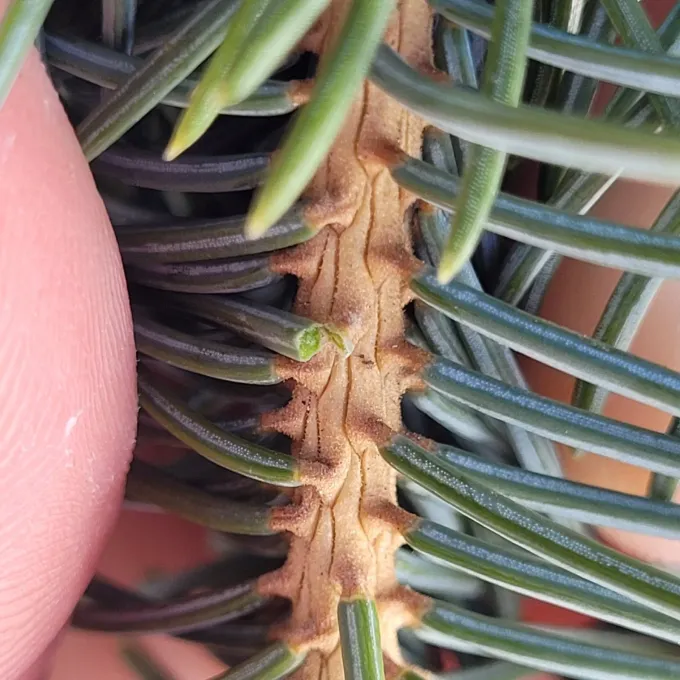
Description
Growing requirements
The Mexican Engelmann spruce is a distinct botanical variety belonging to the Pinaceae family. It is naturally occurring in the high-altitude regions of Mexico, representing a southern extension of the Engelmann spruce complex.
This species thrives in cold and humid mountain environments, typically found at high elevations. It is highly adapted to sites with significant annual precipitation and cold winters, which are essential for its metabolic cycle and growth.
For cultivation, the species requires deep, well-drained, and slightly acidic soils. It is critical to ensure that the site does not experience waterlogging, as the species is intolerant of poor soil aeration and stagnant moisture conditions.
The tree is characterized by a dense conical shape and glaucous needles. Its growth rate is generally slow, and the structural integrity of the wood is quite high, though it is rarely exploited due to the tree's protected status.
Its primary use is for scientific study and specialized botanical collections. Because it is a relic species, its conservation is prioritized over any commercial timber production or large-scale agricultural exploitation.
Main diseases and pests
The main threats to the species involve habitat degradation and climate change, which reduce the moisture availability in its mountain sanctuaries. Insects like bark beetles are known to cause severe damage, especially during prolonged droughts.
Pathogenic fungi can cause needle cast and root rot, particularly in areas with poor drainage or high humidity. Integrated management practices, including careful monitoring and clearing of infected debris, are essential for maintaining the health of these trees.