
Siberian larch
Larix sibirica Ledeb.
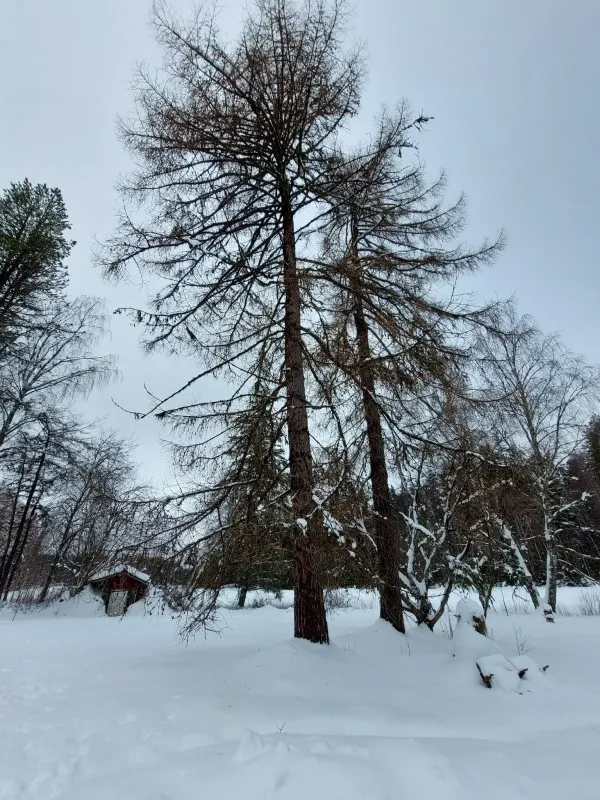
Description
Sowing dates
The sowing of Siberian larch seeds in nurseries typically occurs in early spring once the soil temperature is suitable for germination. Proper stratification of the seeds for several weeks at low positive temperatures is essential to break dormancy and ensure uniform emergence.
For reforestation projects, 1 to 2-year-old seedlings are the preferred planting material. Using containerized seedlings significantly improves survival rates, especially on harsh sites where rapid root establishment is required for early growth success.
The planting density is usually set between 2,500 and 3,500 stems per hectare, depending on the specific silvicultural goals and the fertility of the site. Ensuring correct depth during planting is crucial to prevent root system deformities and promote stability.
In the first few years after planting, controlling competing weeds is vital for the survival of the young larch trees. Mechanical weeding or targeted herbicide application ensures that the seedlings receive sufficient sunlight and nutrients to thrive in their juvenile stage.
Fertilization at the time of planting is generally not required on fertile soils, but on nutrient-poor sites, applying balanced mineral fertilizers can help speed up the early growth phase and increase the overall vigor of the plantation.
Growing requirements
Siberian larch belongs to the Pinaceae family and is recognized as a deciduous conifer, meaning it sheds its needles annually. This biological trait allows it to survive extreme continental climates where severe winter frosts would otherwise damage persistent foliage.
The species is highly light-demanding, requiring full exposure to sun throughout its lifespan. As a shade-intolerant tree, it naturally develops into pure, even-aged stands where competition for light dictates its growth form and pruning needs.
It prefers well-drained, fertile soils, including loams and chernozems, while avoiding stagnant, waterlogged environments. Although adaptable to various soil types, growth rates are significantly better on sites with adequate moisture and good aeration.
Climatic requirements center on cold tolerance, as the species is exceptionally hardy and capable of enduring temperatures well below -40 degrees Celsius. Its natural range across Siberia underscores its evolution in cold-temperate and boreal zones.
The wood of the Siberian larch is highly regarded in the construction industry due to its density, durability, and natural resistance to decay in high-moisture conditions. It is widely used for railway ties, decking, and various exterior structural applications.
Main diseases and pests
Larch needle cast, caused by various fungal pathogens, is a significant threat that results in premature needle drop and yellowing. Proper spacing in nurseries and maintaining good air circulation are key preventative measures against fungal outbreaks.
The larch sawfly is a major pest that can cause significant defoliation in plantations. Monitoring for larval activity is essential, as heavy infestations can drastically reduce tree growth and weaken the resistance of the stands to other stressors.
The Siberian silk moth poses a severe danger to larch stands, with major outbreaks capable of defoliating entire forests over short periods. Integrated pest management, including biological controls, is necessary to mitigate damage in large-scale forest areas.
Bark beetles and other wood-boring insects tend to target trees weakened by drought, disease, or mechanical injury. Maintaining sanitary conditions in the forest, such as the prompt removal of fallen or dying trees, is crucial for population management.
Wildlife browsing on young saplings can cause significant damage and structural defects. Installing protective fences or using repellent treatments is a recommended practice in regions where deer or other herbivores have high population densities.