
Western larch
Larix occidentalis Nutt.
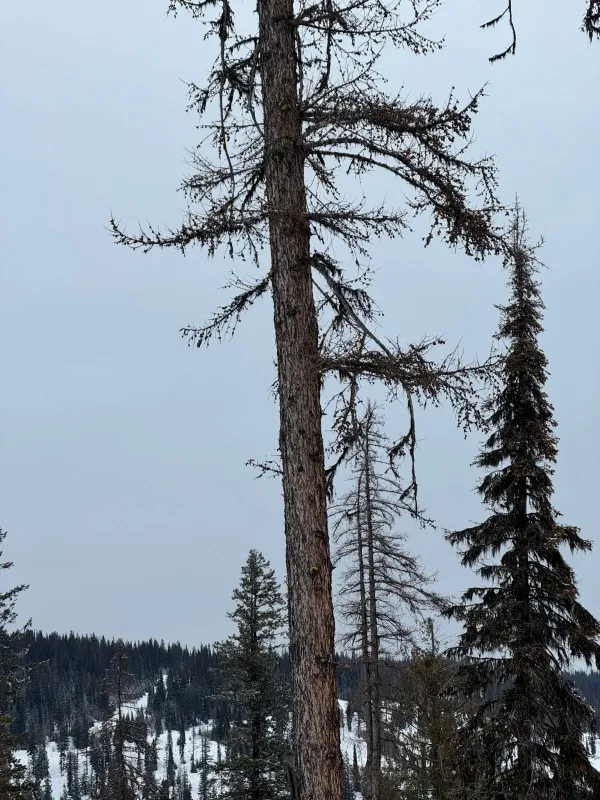
Description
Sowing dates
Western larch (Larix occidentalis) is a member of the Pinaceae family, highly regarded in forestry for its rapid growth and structural wood quality. Seed propagation begins with a mandatory cold stratification period of 30 to 60 days at near-freezing temperatures to break dormancy.
In forest nurseries, seeds are sown in the spring into a well-drained, nutrient-balanced medium. The seeds should be covered with a very light layer of soil or grit to ensure they remain moist while receiving enough light for germination.
Initial growth requires protection from extreme weather and desiccation. Seedlings should be kept in a controlled nursery environment for the first year to ensure they develop a robust root system before being outplanted into the forest.
Outplanting is best performed in early spring as the ground thaws, allowing seedlings to establish before the onset of summer drought. Containerized seedlings are generally preferred in modern forestry due to their superior survival rates compared to bareroot stock.
Spacing during planting is critical; while Western larch is a fast grower, adequate thinning in subsequent years is necessary to prevent overcrowding and to promote optimal stem development for future timber harvesting.
Growing requirements
This species is strictly shade-intolerant and requires full sunlight to thrive. In a forest setting, it must be the dominant or co-dominant species to reach its full growth potential; understory competition will significantly inhibit its development.
Western larch prefers deep, moist, well-drained mineral soils. While it can adapt to various soil types, it performs best on sites where the moisture is abundant but not stagnant, as waterlogged conditions often lead to severe root health issues.
The climate requirements for this species are specific: it flourishes in mountainous terrain characterized by cool summers and cold winters. It is highly resilient to frost but requires adequate air circulation to prevent the buildup of humidity around the foliage.
Soil fertility is important for the early establishment phase. In managed stands, maintaining an appropriate soil pH, ideally ranging from slightly acidic to neutral, ensures the availability of essential micronutrients for vigorous growth.
Air quality is a significant factor in Western larch health. The species is sensitive to industrial pollutants, which can cause foliage damage and overall decline in growth rates, making site selection crucial for sustainable production.
Yield
The primary economic focus of Western larch cultivation is timber production. The wood is dense, strong, and exceptionally durable, making it highly sought after for industrial construction, decking, poles, and framing materials.
Productivity metrics are based on the volume of usable timber per hectare over the typical rotation age, which ranges from 60 to over 100 years. Its rapid height growth allows it to reach marketable size faster than many competing conifers.
Silvicultural management, including pruning lower branches in young stands, can significantly increase the percentage of clear, knot-free wood, thereby enhancing the economic value of the harvested crop.
Sustainable harvesting practices ensure the longevity of the forest stand. The high resin content of the timber provides natural resistance to decay and insects, which adds significant market value to the harvested logs.
While wood production is the dominant use, Western larch stands also serve critical ecological roles, providing habitat for diverse wildlife and contributing to watershed stabilization in steep mountainous regions.
Main diseases and pests
Fungal diseases are the most prevalent threat to Western larch, particularly Larch Needle Cast, which can cause significant defoliation. Repeated infections weaken the tree, leaving it susceptible to secondary infestations.
Pests such as the larch casebearer (Coleophora laricella) can cause severe damage to foliage. Effective management requires early detection and, in some cases, the use of biological control agents or targeted silvicultural practices.
Bark beetles and wood-boring insects pose a constant risk to trees stressed by environmental factors like drought or physical injury. Maintaining forest hygiene by removing dead or dying wood is a standard preventative measure.
Large mammals, such as elk or deer, may browse on young seedlings or damage the bark of saplings during the winter months. Protecting young plantations with fencing is often a necessary investment to ensure successful stand establishment.
- Larch Needle Cast (Meria laricis)
- Larch casebearer (Coleophora laricella)
- Bark beetles (Scolytinae)
- Browsing wildlife damage