
European larch
Larix decidua Mill.
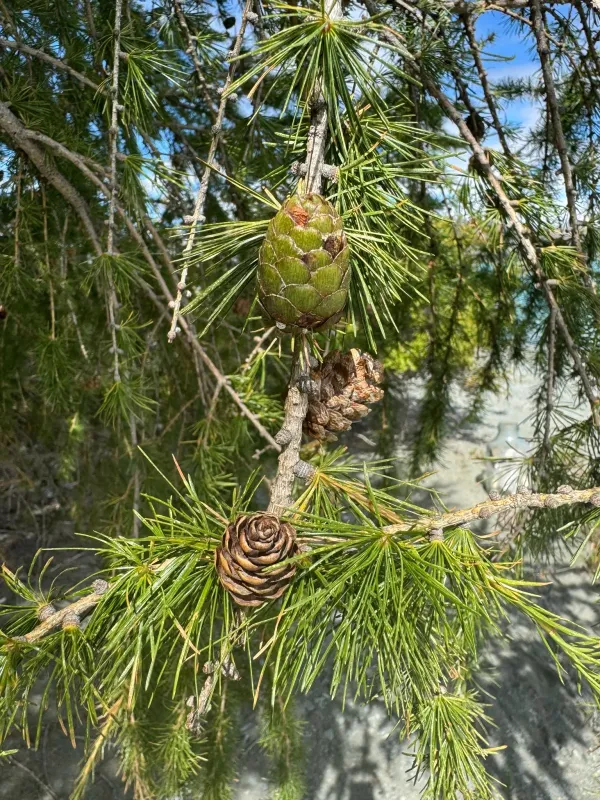
Description
Sowing dates
European larch (Larix decidua Mill.), a member of the Pinaceae family, is typically propagated via seeds. Before sowing, the seeds require a stratification period of 30 to 60 days in cold, moist conditions to break dormancy and ensure high germination rates.
Seeds are sown in well-prepared nursery beds at a depth of 1 to 1.5 cm. Maintaining adequate moisture is crucial, as the seeds are highly sensitive to dehydration during the initial germination phase.
In modern nurseries, the use of container-grown seedlings (closed root system) is preferred. This method significantly enhances survival rates when seedlings are transplanted into the forest or landscape sites.
The standard sowing density is approximately 10–12 grams of seed per linear meter. Once the seedlings emerge, thinning is required to prevent overcrowding and to ensure proper resource allocation for each plant.
The ideal time for transplanting young trees to their permanent location is early spring, before the onset of active shoot growth, which helps the trees establish roots quickly in the new environment.
Growing requirements
European larch is a light-demanding species that requires full sun exposure for optimal growth. Growing in shaded conditions leads to sparse crown development, reduced growth rates, and increased susceptibility to pests.
The species prefers fresh, well-drained loamy or sandy-loam soils. While it can tolerate brief periods of excess moisture, it performs poorly in permanently waterlogged or heavy, compacted soil conditions.
The tree exhibits high cold tolerance, making it suitable for regions with harsh winter climates. However, young larch trees are vulnerable to late spring frosts, which can damage new, tender foliage.
During its juvenile stage, the European larch demonstrates a rapid growth rate. Providing balanced fertilization and maintaining appropriate soil nutrient levels in the early years will significantly boost overall development.
Native to the mountain regions of Central Europe, the tree is adapted to environments with moderate to high air humidity. Proper site selection, prioritizing open and airy locations, is essential for its health.
Yield
The primary economic use of the European larch is its high-quality timber. Known for its strength, density, and natural resistance to decay, larch wood is highly valued in the construction industry.
Its rot-resistant properties make it an excellent choice for outdoor construction, marine structures, bridges, and foundation pilings, where other softwood species might degrade quickly due to moisture.
In silviculture, the yield of a larch plantation is determined by effective spacing and regular thinning practices. Proper forest management ensures the development of high-quality, straight-stemmed logs.
Besides industrial wood production, the species is widely used in landscape design and ornamental forestry. Its deciduous nature, resulting in vibrant yellow autumn foliage, provides high aesthetic value.
Sustainable yield management involves periodic assessments of the stand's volume and health, ensuring that the harvest cycles are balanced with regeneration efforts to maintain long-term productivity.
Main diseases and pests
The most significant threat to the European larch is the Larch Canker, caused by the fungus Lachnellula willkommii. This disease manifests as cankers on branches and stems, which can severely weaken the tree and impact wood quality.
In nursery environments, seedlings are prone to damping-off disease caused by various soil-borne pathogens. Maintaining good hygiene and proper ventilation in greenhouses is critical for disease prevention.
Insect pests such as the Larch Casebearer and various adelgids can cause extensive defoliation, leading to reduced vigor and stunted growth if not managed through integrated pest control programs.
- Larch Canker (Lachnellula willkommii)
- Damping-off disease (Fusarium/Rhizoctonia)
- Larch Casebearer (Coleophora laricella)
- Larch Adelgid (Adelges laricis)
Effective management includes the removal and destruction of infected material, regular site monitoring for pest presence, and the timely application of fungicides and insecticides as part of an integrated management strategy.