
Japanese larch
Larix kaempferi (Lamb.) Carrière
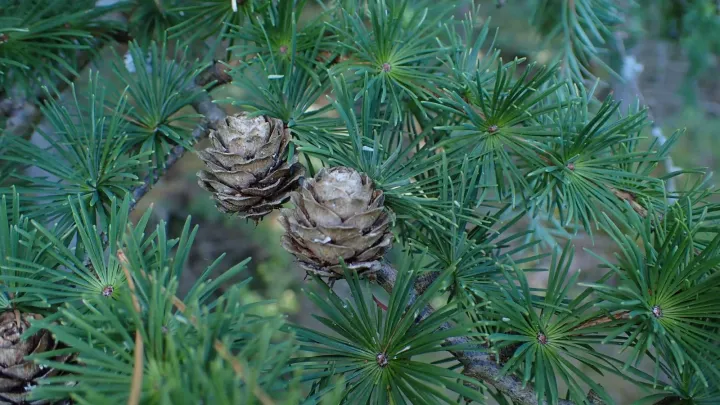
Description
Sowing dates
Japanese larch (Larix kaempferi), a member of the Pinaceae family, is propagated primarily through seeds. Seeds require cold stratification for approximately 1-2 months at temperatures between +3°C and +5°C to break dormancy and ensure uniform germination.
Sowing in forest nurseries typically occurs in early spring once soil temperatures reach +10°C. Seeds are placed at a depth of 1-1.5 cm and covered with a light layer of mulch, such as peat or sawdust, to maintain soil surface moisture.
During the initial growth stages, seedlings exhibit slow development and remain sensitive to intense sunlight and drought. Adequate shading and regular monitoring of soil moisture are essential for successful seedling establishment.
Transplanting is best performed during the tree's dormant period. The root system is delicate, necessitating careful extraction with a substantial soil ball to avoid root hair damage during relocation.
Vegetative propagation via cuttings is highly inefficient for this species, with very low success rates. Consequently, seed-based production remains the industry standard for large-scale reforestation efforts.
Growing requirements
As a light-demanding species, Japanese larch requires full sun exposure to maintain its form and growth rate. Heavy shade results in sparse foliage and significantly stunted development.
The species prefers fertile, well-drained, loamy, or sandy-loam soils. It is particularly sensitive to stagnant water and waterlogged soils, which promote root rot; therefore, proper drainage is critical on clay-heavy sites.
Japanese larch thrives in neutral to slightly acidic soil conditions (pH 5.5-6.5). It is known for its ability to adapt to various temperate climates, demonstrating excellent winter hardiness.
Although it is moderately drought-tolerant once established, young trees require consistent moisture to thrive. Providing irrigation during dry spells in the first few years after planting is highly recommended.
Air humidity plays a vital role in the physiological health of the tree, as high humidity promotes faster growth rates during the active vegetation season.
Yield
Japanese larch is highly valued in commercial forestry for its rapid growth rate, which significantly exceeds that of many other native conifers. It serves as a primary source of high-quality timber.
The wood is dense, resinous, and exceptionally durable, particularly when exposed to moisture. It is widely used in bridge construction, railway sleepers, marine engineering, and heavy-duty structural framing.
In well-managed plantations, Japanese larch can reach harvestable timber size within 60 to 80 years. Its biomass production is efficient, making it a preferred choice for rapid forest reclamation projects.
Beyond timber, the species is valued for its rapid carbon sequestration capabilities and its aesthetic appeal in landscape architecture due to its characteristic golden-yellow autumn foliage.
Harvesting strategies involve thinning cycles to promote stand health and individual tree growth, followed by final felling once the trees reach industrial size and maturity.
Main diseases and pests
Larch needle cast (caused by various fungal species) is a frequent problem, leading to premature needle browning and shedding. Fungicidal applications may be required in nursery settings to mitigate damage.
The larch canker, often associated with harsh winters and site stress, can cause structural damage to the stems, reducing the timber's quality and overall tree vitality.
Pests such as the larch casebearer and woolly aphids (Adelgids) feed on the needles and buds, causing significant stress to the tree and potentially leading to stunted growth if left unmanaged.
Management of these threats involves integrated pest management (IPM) practices, including the removal of infested branches and the strategic use of insecticides during the insects' vulnerable larval stages.
- Implementation of forest sanitation measures to prevent disease spread.
- Regular assessment of tree health during the peak growing season.
- Use of certified, healthy planting material from reputable nurseries.