
Melaleuca pentagona var. latifolia
Melaleuca pentagona Labill. var. latifolia Benth.
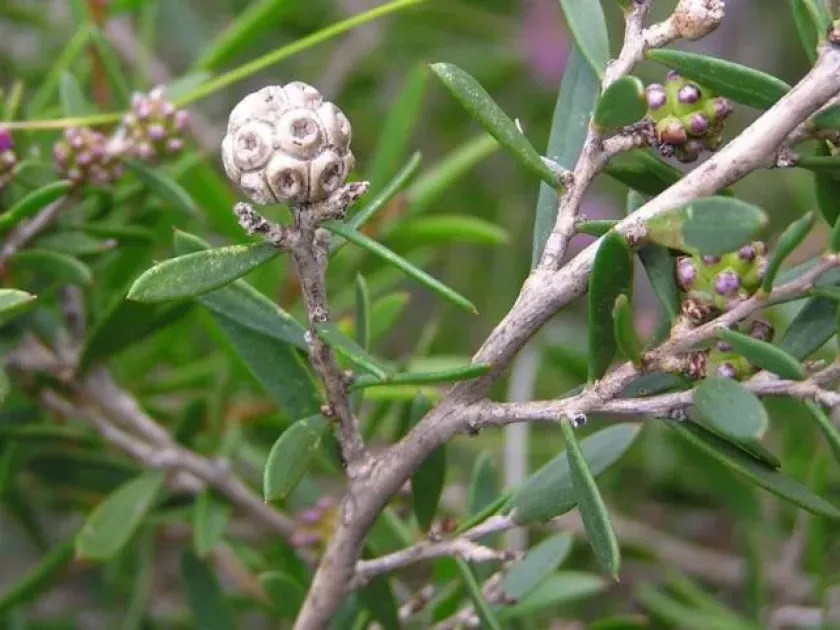
Description
Growing requirements
Melaleuca pentagona var. latifolia is a member of the Myrtaceae family. This evergreen shrub is native to Western Australia and is well-adapted to Mediterranean-type climates.
The plant thrives in well-draining sandy or loamy soils. It is essential to ensure that the site has excellent drainage, as the roots are sensitive to waterlogging, which often leads to rapid decline.
Sunlight exposure is a critical requirement for this species. To achieve optimal growth and density, it should be planted in a location that receives full sun for the majority of the day.
Agricultural management involves careful irrigation during the establishment phase. Once the plant has developed a deep root system, it exhibits remarkable drought tolerance in its native environment.
The ornamental value of this shrub lies in its unique foliage and distinct growth habit, making it a suitable choice for dryland landscaping and water-wise gardening projects.
Main diseases and pests
Fungal pathogens represent the most significant threat to this species, particularly when planted in environments with poor air circulation or excessive soil moisture.
Pests such as spider mites and mealybugs can cause damage during hot and dry periods, often appearing on the underside of the leaves or around new growth tips.
Root rot caused by Phytophthora species is a persistent concern in many regions where the soil environment is not perfectly managed for this specific genus.
Nutrient imbalances, particularly iron chlorosis, can occur if the soil pH is not maintained within the optimal range, reducing the plant's overall vigor.
Strategic pruning is necessary to maintain plant hygiene, as removing dead or overcrowded branches reduces the habitat available for potential pests and disease clusters.