
Angophora floribunda
Angophora floribunda
Description
Sowing dates
Propagation of Angophora floribunda, commonly known as the rough-barked apple, is primarily achieved through seed germination. Sowing is best performed in spring when the ambient temperature is steady between 18 and 22 degrees Celsius.
Seeds typically benefit from cold stratification to break dormancy and improve uniformity in germination rates. They should be sown in a well-draining, sterile potting medium to prevent pre-emergence damping-off.
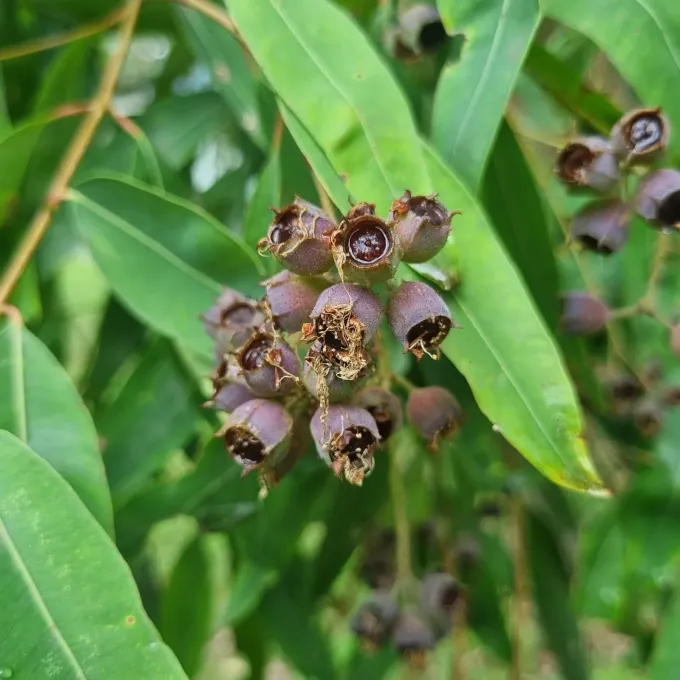
In its native Australian habitat, the species exhibits pyrophyte tendencies, where heat from bushfires aids in the release and germination of seeds stored in woody capsules.
For nursery production, seeds are sown in deep containers to accommodate the rapid development of the primary taproot. Careful handling during transplanting is essential to maintain root integrity.
Seedlings require protection from harsh winds and intense frost during their initial development stages. Once established, they exhibit a moderate growth rate and excellent drought tolerance.
Growing requirements
Angophora floribunda belongs to the Myrtaceae family and is native to the coastal regions of eastern Australia. It thrives in various soil types, ranging from sandy loams to heavier clays, provided there is adequate drainage.
The species demonstrates a high tolerance for varying soil fertility levels, though it responds positively to well-drained, nutrient-rich soils. Waterlogging is the most significant limiting factor for healthy root development.
Full sun exposure is crucial for the tree to maintain its characteristic form and density. Shaded environments often lead to sparse canopy development and a significant reduction in flower production.
Regarding climate, the plant prefers warm to temperate conditions. While it can withstand occasional light frost once fully mature, it is generally unsuited for regions with prolonged sub-zero temperatures.
Soil pH levels should ideally be slightly acidic to neutral. The tree's ability to adapt to diverse topographical conditions makes it a versatile candidate for reforestation and ornamental landscaping.
Yield
The primary utility of Angophora floribunda lies in its contribution to biodiversity and its role as a significant nectar source. It is highly valued in apiculture for supporting healthy honeybee populations.
The timber of this tree is hard and durable; however, it is rarely used in commercial timber production due to the natural irregularities in the growth of the trunks, which makes consistent processing difficult.
The tree serves an essential role in environmental rehabilitation projects. Its robust root system aids in soil stabilization on embankments and prevents erosion in hilly terrain.
Essential oils extracted from the foliage contain compounds with antimicrobial potential, presenting an area of interest for future pharmacological and biotechnical research.
Ornamental use is widespread in parks and large estates where the tree's striking appearance, particularly during the flowering season in mid-summer, provides significant aesthetic value.
Main diseases and pests
The most common disease impacting the health of Angophora floribunda is powdery mildew, which thrives during periods of high humidity and poor canopy airflow.
Phytophthora root rot is a severe threat, especially in soils that lack proper drainage. Once infected, the tree typically shows signs of canopy thinning and dieback, which are often irreversible.
Pests such as leaf miners and scale insects can affect younger trees. These infestations, if not managed, can lead to stunted growth and increased susceptibility to secondary pathogenic infections.
Wood-boring beetles can target stressed trees during prolonged periods of drought. Maintaining tree vigor through proper site selection and watering helps minimize these risks.
- Regular pruning of dead or diseased branches improves air circulation.
- Soil monitoring and drainage improvements are the best defenses against root pathogens.
- Integrated pest management should be used to minimize chemical usage in ornamental settings.