
Wilson's Magnolia
Magnolia wilsonii
Description
Growing requirements
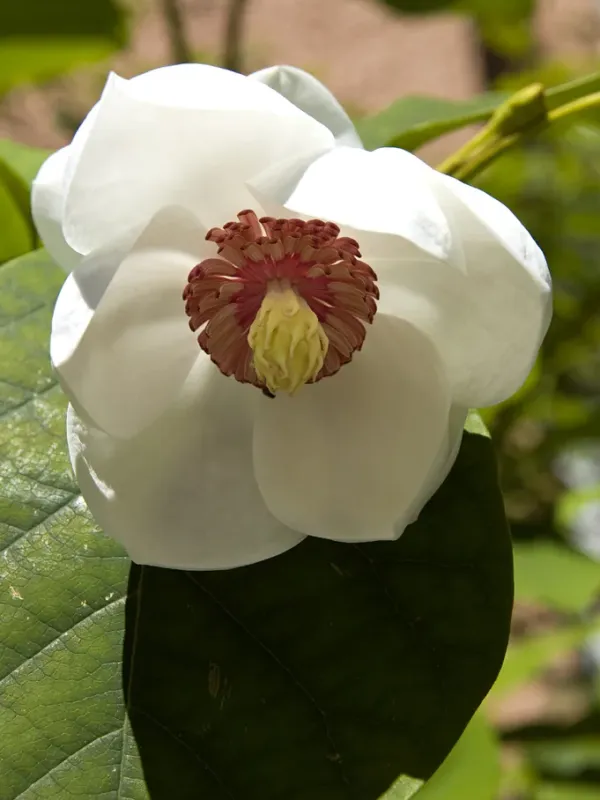
Wilson's Magnolia (Magnolia wilsonii) is a deciduous shrub or small tree belonging to the Magnoliaceae family. It is highly valued for its striking, nodding, cup-shaped white flowers with prominent deep crimson stamens that emit a sweet fragrance.
Originating from the mountainous regions of Western China, specifically Sichuan and Yunnan, this species is adapted to cool, moist environments. It thrives in temperate zones and struggles in areas with intense, prolonged summer heat.
Successful cultivation requires fertile, well-draining, and acidic soil. The plant is sensitive to waterlogging; therefore, adding organic matter such as peat or leaf mold is recommended to improve soil structure and maintain a low pH level.
The ideal planting site should offer partial shade, particularly protection from the harsh afternoon sun. Wind protection is essential as the delicate branches and large leaves can be easily damaged by strong, dry gusts.
Regular maintenance includes consistent irrigation to keep the root ball moist, especially during the first few years after planting. Fertilizer applications should be focused on the growing season, utilizing acid-loving plant formulas.
Main diseases and pests
The primary threats include fungal pathogens such as powdery mildew and grey mold (Botrytis), which can proliferate in stagnant air conditions. Ensuring good spacing and airflow is the most effective preventative measure.
Common pests affecting this species are aphids, scale insects, and spider mites. Regular monitoring of the underside of leaves is recommended, followed by targeted insecticide treatments when infestation thresholds are exceeded.
Iron chlorosis is a common physiological issue occurring in soils with a high pH or poor drainage. Treating this involves soil acidification or the application of chelated iron supplements to restore chlorophyll synthesis.
Bark wounds, whether caused by frost cracking or mechanical tools, can act as entry points for pathogens. Such wounds should be cleaned and protected with appropriate horticultural sealants or fungicides.
Winter injury can also occur in colder climates, leading to dieback. Providing winter mulch around the base of the plant helps protect the root system from fluctuating ground temperatures throughout the dormant season.