
Magnolia veitchii
Magnolia veitchii
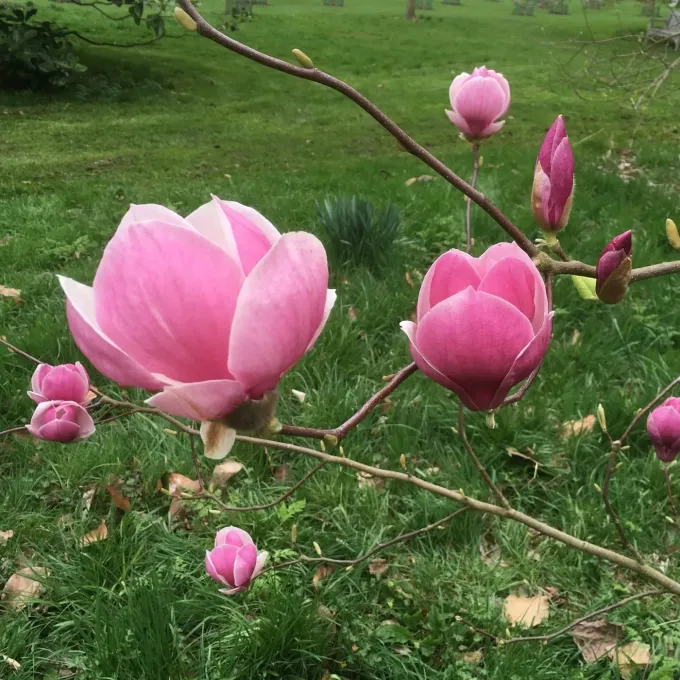
Description
Growing requirements
Magnolia veitchii is a deciduous hybrid tree belonging to the Magnoliaceae family. It is a result of breeding Magnolia denudata and Magnolia campbellii, valued for its spectacular, large, and fragrant pink blossoms that appear in early spring.
The tree thrives in well-drained, fertile soil that is rich in organic matter. A slightly acidic to neutral pH level is ideal for supporting healthy nutrient uptake and vigorous root development throughout the growing season.
Regarding climate, this species prefers temperate zones with moderate moisture. It requires protection from harsh, drying winds and late spring frosts, which can damage the delicate flower buds before they open.
Site selection is crucial: full sun to partial shade is recommended. In regions with intense summer heat, afternoon shade is highly beneficial to prevent the foliage from scorching and to maintain soil moisture levels.
Maintenance involves deep watering during dry spells and consistent mulching. Mulch helps regulate soil temperature and suppresses weed growth, which is essential for young specimens competing for nutrients.
Main diseases and pests
Magnolia veitchii is susceptible to several pathogens, including Verticillium wilt and fungal leaf spots, which typically occur under conditions of high humidity or poor air circulation around the canopy.
Pest pressure often comes from aphids and scale insects. These pests feed on the sap, which can weaken the tree's immune system and create sticky honeydew deposits that eventually lead to sooty mold growth.
Root rot is a significant danger in poorly drained clay soils. If the soil remains waterlogged for extended periods, the root system fails to oxygenate, eventually leading to the decline of the entire tree.
Integrated pest management is the most effective approach. This includes manual removal of pests, regular pruning of deadwood to improve airflow, and the use of targeted systemic insecticides when necessary.
- Use organic compost to enrich the soil structure.
- Sterilize pruning tools between cuts to prevent pathogen spread.
- Monitor the trunk for signs of borer activity or mechanical damage.