
Magnolia pterocarpa
Magnolia pterocarpa
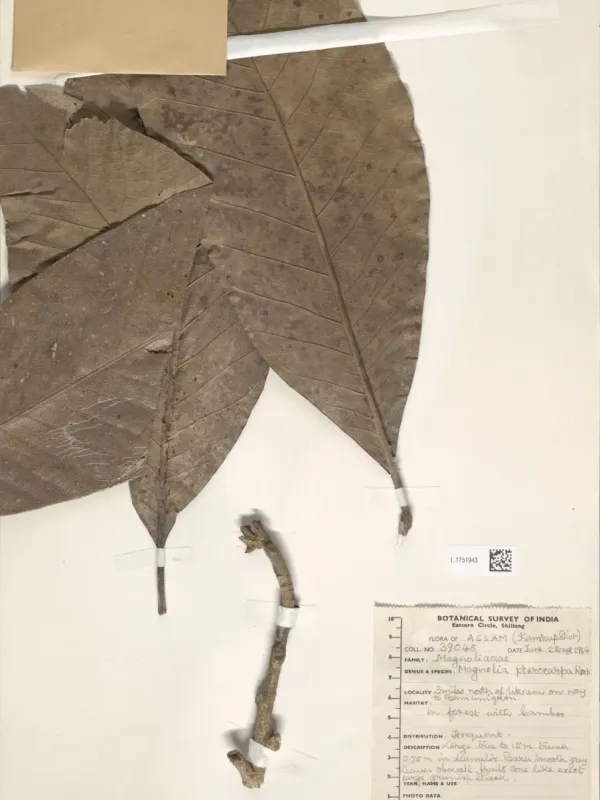
Description
Growing requirements
Magnolia pterocarpa is a notable member of the Magnoliaceae family, recognized for its evergreen foliage and large, fragrant flowers. It is native to the moist, subtropical forests of the Himalayas and parts of Southeast Asia.
The botanical structure of this species includes broad, leathery leaves and a complex root system that requires significant moisture levels. Unlike some temperate species, it thrives best in environments where humidity remains consistently high throughout the growing season.
Cultivation requires fertile, well-draining soil with a slightly acidic pH. Incorporating organic matter, such as compost or peat moss, is highly recommended to mimic the nutrient-rich conditions of its natural forest habitat.
Climatic requirements are specific, as the plant is not frost-tolerant. It should be grown in sheltered locations, ideally in conservatories or greenhouses in temperate zones to protect it from extreme cold and drying winds.
General maintenance involves consistent irrigation and protection from direct, harsh sunlight during the hottest part of the day. Proper site selection is crucial to ensure the longevity and decorative impact of the tree.
Main diseases and pests
Fungal pathogens such as powdery mildew and leaf spot are common threats to Magnolia pterocarpa. These issues typically emerge when ventilation is poor, and humidity levels are uncontrolled in an indoor or greenhouse setting.
Pests such as scale insects and spider mites are frequent invaders. These organisms feed on the plant's sap, leading to yellowing leaves and potentially stunting the tree's overall growth if not treated early.
Root rot remains a fatal condition for this species, often triggered by waterlogged soil. Ensuring that containers or planting beds have excellent drainage is the primary defense against this destructive infection.
Nutrient deficiencies, specifically iron chlorosis, can cause significant stress to the plant. This condition is often characterized by interveinal yellowing, which can be corrected through targeted soil amendments.
Integrated pest management, including regular scouting and maintaining optimal environmental parameters, is essential for keeping Magnolia pterocarpa healthy and thriving in a managed landscape or collection.