
Nilgiri magnolia
Magnolia nilagirica
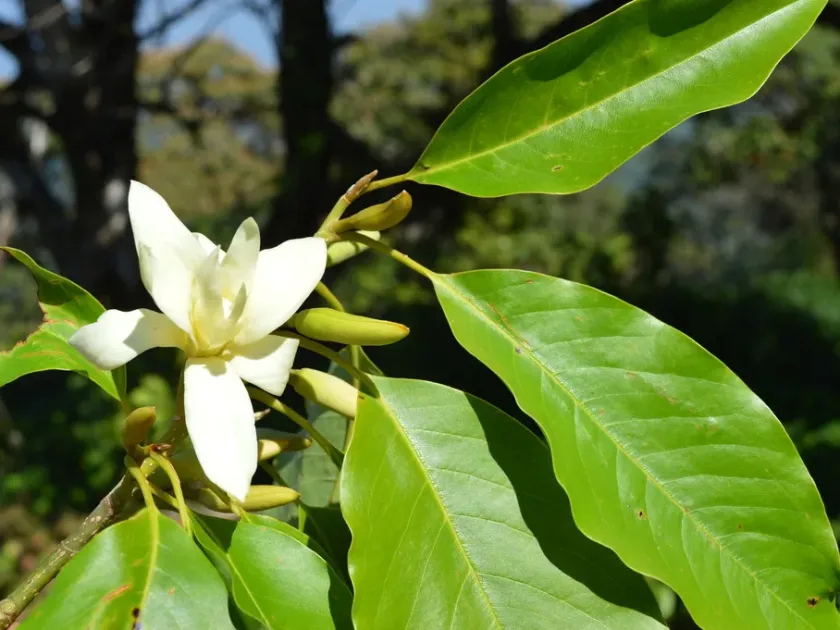
Description
Growing requirements
The Nilgiri magnolia (Magnolia nilagirica) is a significant species belonging to the Magnoliaceae family. It is native to the higher altitude montane forests of the Nilgiri Hills in Southern India.
This species thrives in cool, humid environments with a consistent supply of moisture. It is particularly well-adapted to the shola forest ecosystems, often found on misty mountain slopes.
Ideal soil conditions include deep, humus-rich substrates that are slightly acidic. Proper drainage is absolutely essential to prevent root rot, as the species does not tolerate stagnant water.
Cultural requirements involve protecting young saplings from harsh, direct sunlight and strong winds, which can desiccate the foliage and stunt initial growth.
Standard care involves regular mulching to keep the root system cool, reflecting its natural habitat conditions under the forest canopy of higher elevations.
Harvesting
The primary utility of the Nilgiri magnolia is ornamental, valued for its elegant form and fragrant flowers that enhance botanical garden collections worldwide.
The species plays an ecological role in stabilizing montane slopes and supporting local biodiversity, which makes its conservation a priority over commercial harvesting.
Seed propagation is the main agricultural focus for this species, requiring careful collection of follicles just before they naturally dehisce to release seeds.
Floral extracts are sometimes explored for essential oil production, taking advantage of the complex, sweet scent profile inherent to the genus Magnolia.
Cultivation of this plant requires patience, as it is a slow-growing tree that necessitates a long-term commitment to site maintenance and environmental monitoring.