
Lily magnolia
Magnolia liliifera
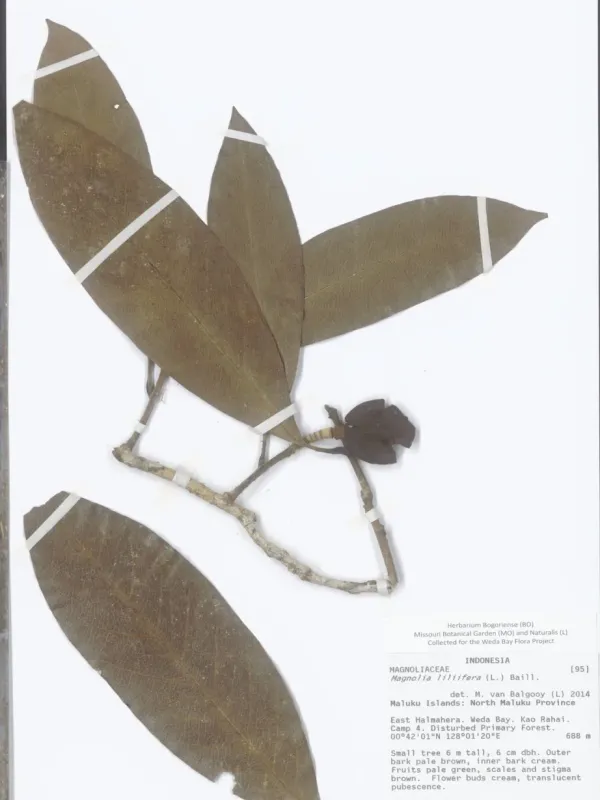
Description
Growing requirements
Lily magnolia (Magnolia liliiflora) is a deciduous shrub belonging to the Magnoliaceae family. Native to China, this species is highly regarded in horticulture for its distinct, tulip-shaped, purple-pink flowers that appear before the leaves emerge.
This species thrives in locations protected from strong winds, preferring deep, fertile, and well-drained soils. It performs best in slightly acidic soil conditions, which facilitate the uptake of essential nutrients for lush growth.
Climate preferences include a temperate climate with consistent moisture levels throughout the growing season. While the plant is hardy in many temperate zones, young specimens benefit significantly from protective mulching during the first few years of establishment.
Maintenance involves frequent watering during dry spells, as the plant's shallow root system is sensitive to water stress. Applying organic mulch, such as pine bark, is essential to keep the root zone cool and moist during summer months.
Fertilization should be limited to the early spring season, focusing on balanced slow-release fertilizers. Pruning should be kept to a minimum and performed immediately after the flowering period to preserve the following year's buds.
Main diseases and pests
The plant is occasionally attacked by scale insects and spider mites that feed on the foliage. Monitoring the undersides of leaves and applying horticultural oils or soap sprays is effective for early control of these infestations.
Fungal issues such as leaf spot or powdery mildew can occur in environments with poor air circulation or excessive humidity. Ensuring proper spacing and keeping the foliage as dry as possible helps prevent the development of these pathogens.