
Magnolia koordersiana
Magnolia koordersiana
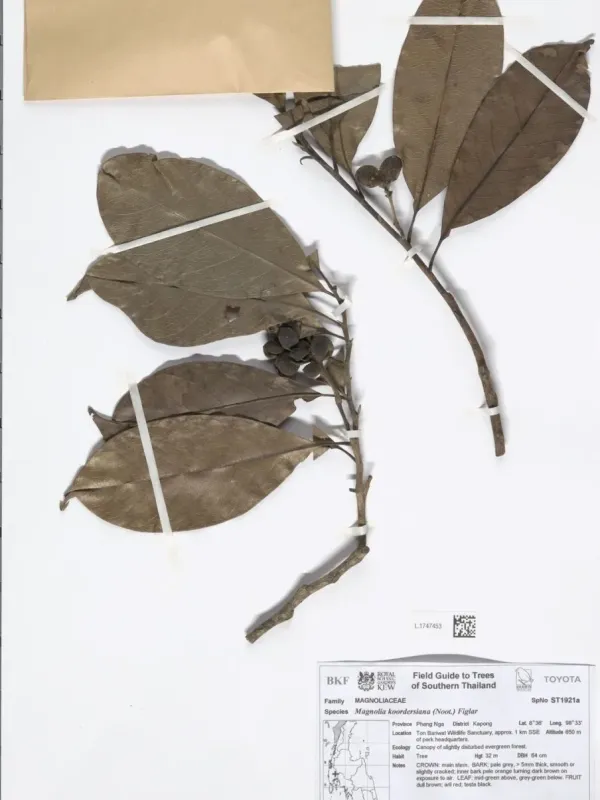
Description
Growing requirements
Magnolia koordersiana is a rare evergreen tree species belonging to the Magnoliaceae family. Native to the tropical rainforests of Sulawesi, Indonesia, this plant is a specialized inhabitant of humid, high-altitude or low-land tropical ecosystems where moisture levels remain consistently high throughout the year.
From a botanical perspective, the plant is characterized by its robust foliage and typical Magnolia-like structure, though it exhibits specific adaptations to the tropical environment. Its growth rate is generally slow, and it requires a stable, warm climate without the risk of frost or cold spells, which would typically cause irreparable damage to its tissues.
Cultivation requirements involve high-quality, organic-rich soil with excellent drainage capabilities to prevent root rot. The soil pH should remain slightly acidic to neutral. In a managed environment, providing consistent moisture is critical, as the species does not possess mechanisms to survive prolonged dry periods common in seasonal climates.
The tree thrives best in partial shade, mimicking its natural position beneath the forest canopy. Because it is highly sensitive to temperature fluctuations, it is strictly an indoor or greenhouse plant in non-tropical regions. Growers must maintain a humidity level that reflects its native rainforest conditions for successful long-term development.
The economic and practical use of Magnolia koordersiana is primarily centered on botanical conservation and ornamental study. Given its scarcity and limited distribution, it serves as an important genetic resource for researchers focused on the survival and diversification of the Magnoliaceae family in changing global climates.