
Yellow cucumber magnolia
Magnolia cordata
Description
Growing requirements
Magnolia cordata, commonly known as the Yellow cucumber magnolia, is a deciduous tree belonging to the Magnoliaceae family. It is native to the southeastern United States, particularly within the mountainous regions of Georgia and the Carolinas.
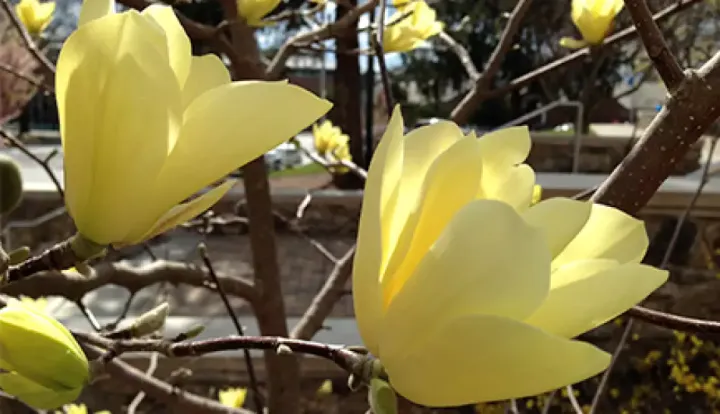
The tree is botanically distinguished by its broadly ovate to heart-shaped leaves and its small, bell-shaped, yellow flowers that bloom in late spring. It typically grows as a medium-sized tree, often utilized as a focal point in landscapes.
The species requires deep, fertile, and well-drained soil with a slightly acidic pH level. It performs poorly in heavy clay soils or areas prone to waterlogging, which can lead to rapid decay of the shallow root system.
Climate requirements include exposure to partial or full sun, though young trees benefit from protection against intense afternoon heat and strong, drying winds. It is reasonably hardy, but dormant buds may be susceptible to late spring frost damage.
The primary use of this species is ornamental landscape gardening. Due to its unique flower color, it serves as a crucial parent plant for breeding programs focused on developing hardy yellow-flowered magnolias for home gardens.
Main diseases and pests
Iron chlorosis is a common disorder in Magnolia cordata when grown in soils with a high pH or excessive lime content. This leads to interveinal yellowing of leaves and can be mitigated by amending the soil with sulfur or peat moss.
Fungal pathogens such as powdery mildew may appear during periods of high humidity and poor air circulation. Proper spacing during planting and pruning of crossing branches are essential preventive measures to maintain plant health.
Pests such as aphids and scale insects often congregate on new succulent growth during the spring months. Regular monitoring and, if necessary, the application of horticultural oils or insecticidal soaps can effectively control these populations.
Root rot, particularly caused by Phytophthora species, is a critical threat typically associated with overwatering. Ensuring the site has excellent drainage is the most effective way to prevent this destructive soil-borne disease.
Winter injury to the bark, caused by alternating freezing and thawing temperatures, can lead to splits that serve as entry points for pathogens. Wrapping the trunks of young trees in the winter provides necessary insulation and protection.