
Magnolia champaca
Magnolia champaca
Description
Growing requirements
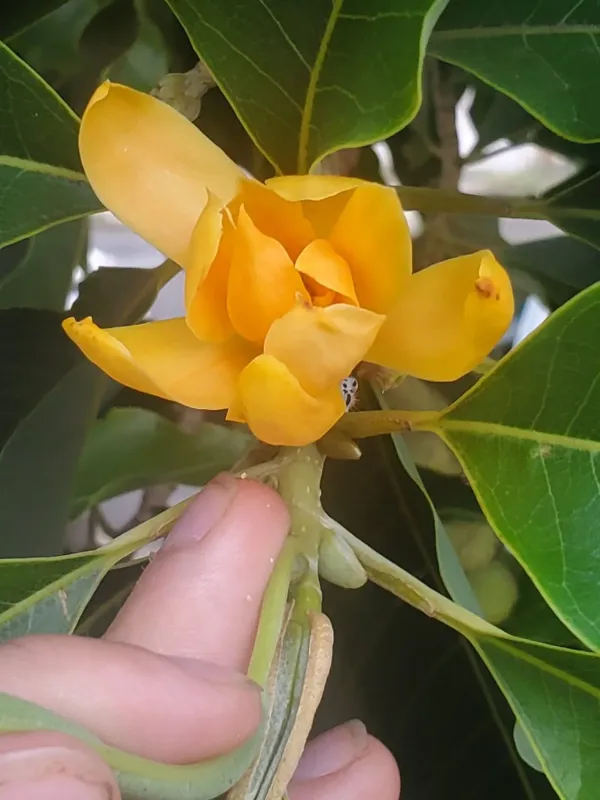
Magnolia champaca, commonly known as champaca or Joy perfume tree, is a large evergreen tree belonging to the Magnoliaceae family. It is prized for its highly fragrant yellow-to-orange flowers.
Native to tropical and subtropical regions of Southeast and South Asia, this tree thrives in environments with high rainfall and warm temperatures throughout the year. It does not tolerate frost, making it suitable for tropical climates.
The ideal soil conditions are well-drained, fertile, and slightly acidic loams. It requires significant moisture in the soil, yet the root system is sensitive to waterlogging, necessitating excellent drainage in agricultural plots.
Cultural practices include ensuring sufficient space for canopy development, as mature trees can grow quite tall. Protecting the plants from strong gusts is essential to prevent physical damage to the fragrant flowers.
Propagation is typically done through seeds, which must be sown fresh to ensure viability, or by vegetative methods such as semi-hardwood cuttings treated with rooting hormones in high-humidity nurseries.
Yield
The primary economic output is the essential oil extracted from the flowers, which is a highly valued ingredient in luxury perfumery. The production yield depends heavily on tree maturity and pollination conditions.
In addition to the flowers, the tree provides high-quality timber known for its durability and resistance to termites. This adds secondary economic value to plantations once trees reach their harvestable age.
The harvesting of flowers requires significant labor as the process must be handled with extreme care to maintain the integrity of the petals and the quality of the volatile aromatic compounds.
Sustainable agricultural practices, including the use of organic fertilizers, can increase the longevity of the trees and improve the annual output of floral biomass used for distillation.
The global market for champaca oil remains stable due to its unique olfactory profile, which cannot be easily replicated by synthetic alternatives in the cosmetic industry.
Main diseases and pests
Fungal diseases like leaf spot and anthracnose are common threats in plantations, especially during the monsoon or wet seasons when air humidity is excessively high.
Pests such as scale insects, mealybugs, and spider mites frequently infest the foliage, sucking sap and weakening the tree, which directly correlates to a drop in flowering performance.
Management of these threats involves cultural controls such as spacing trees appropriately to allow sunlight penetration and airflow, which naturally suppresses fungal growth.
Integrated Pest Management (IPM) strategies are recommended to keep plantations healthy while ensuring the end product remains free of harmful pesticide residues, which is critical for perfume-grade oil.
- Regular monitoring of canopy health.
- Removal of infected branches and debris.
- Use of biological control agents for pest management.
Harvesting
Flower harvesting is performed early in the morning before the day's heat causes the aromatic oils to evaporate. This ensures the maximum yield of concentrated fragrance per kilogram of petals.
Post-harvest handling is critical; flowers must be transported to the extraction facility immediately to avoid fermentation, which can alter the delicate scent profile of the extracted essential oil.