
Campbell's magnolia
Magnolia campbellii
Description
Growing requirements
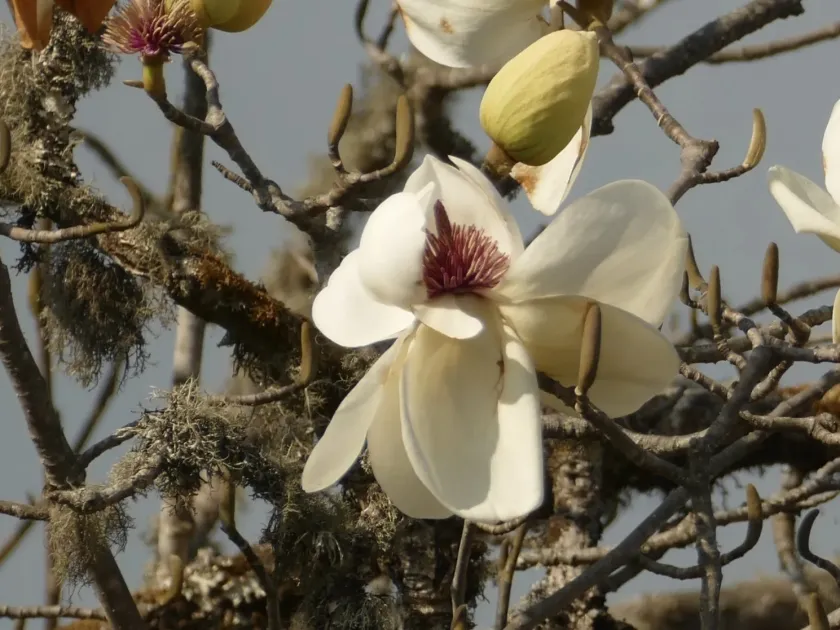
Campbell's magnolia (Magnolia campbellii) is a prominent deciduous tree species belonging to the Magnoliaceae family. Native to the Himalayan region, it is celebrated for its spectacular floral display that appears on bare branches before the foliage emerges.
This species thrives in climates that mirror its mountain origin, preferring cool to mild temperatures and high atmospheric humidity. It is particularly susceptible to damage from late spring frosts, which can ruin the blooming cycle.
Cultivation requires deep, well-draining, humus-rich soil with a slightly acidic pH. The root system is relatively shallow and sensitive, so it should not be disturbed, and the soil must be kept moist without being waterlogged.
Optimal site selection is vital; the plant requires a sheltered location with dappled sunlight. Protection from strong winds is essential to prevent mechanical damage to the large, fragile leaves and the showy blossoms.
A consistent maintenance schedule includes the application of organic mulch around the base to preserve moisture and regulate soil temperature. Regular monitoring for nutrient deficiencies, particularly iron, is recommended for long-term health.
Main diseases and pests
Fungal pathogens such as mildew and leaf spot are the most common health issues for Magnolia campbellii. These are usually managed through cultural practices like proper spacing and leaf hygiene.
Scale insects can infest branches, leading to a decline in tree vigor if left unchecked. These pests are best managed during the dormant season with horticultural oils or during active phases with targeted systemic sprays.
Iron chlorosis is frequently observed in specimens planted in unsuitable alkaline soil. This condition is characterized by yellow leaves with green veins and is mitigated by applying chelated iron supplements.
Poor drainage frequently leads to root rot, which is often fatal. Ensuring the tree is planted on a mound if the soil is heavy can significantly improve the survival rate and overall growth performance.
Animal browsing by rodents can be a significant threat to juvenile trees. Installing protective trunk guards during winter months is a standard practice to prevent girdling of the stems by rabbits or mice.