
Magnolia amoena
Magnolia amoena
Description
Growing requirements
Magnolia amoena is a deciduous shrub or small tree belonging to the Magnoliaceae family. Native to the mountainous regions of Eastern China, specifically provinces like Zhejiang, this species is highly valued for its elegant appearance and early spring blossoms.
The plant thrives in fertile, well-drained soils with an acidic to neutral pH level. It is essential to ensure that the site does not experience waterlogging, as the roots are sensitive to anaerobic conditions and can rot quickly if the drainage is poor.
When selecting a planting site, choose an area that receives full sun to light shade and is protected from harsh, drying winds. Exposure to strong winds can cause damage to the fragile branches and result in the premature drop of flower buds during the spring season.
Standard cultivation practices involve consistent watering, particularly during the establishment phase and periods of drought. Applying a layer of organic mulch, such as pine bark or wood chips, helps maintain soil moisture, suppresses weeds, and preserves the acidity of the growing medium.
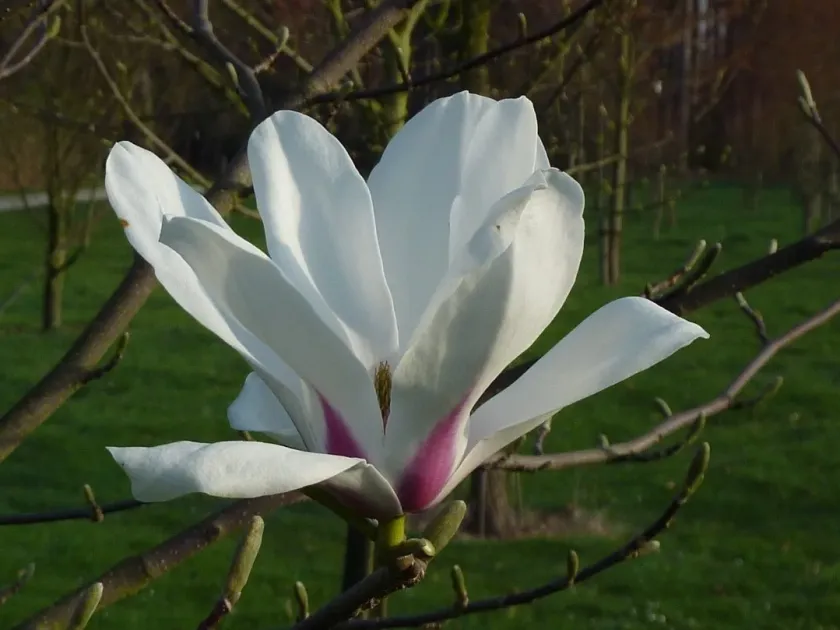
The primary use of Magnolia amoena is ornamental. It is widely planted in botanical gardens, arboretums, and private landscapes for its aesthetic contribution. Its delicate pink to white flowers appear before the leaves, creating a spectacular display in early spring.
Main diseases and pests
This species is susceptible to various fungal pathogens, especially in humid and stagnant air conditions. Powdery mildew and fungal leaf spots are common issues that can detract from the plant's health and visual appeal if not managed correctly.
In terms of pests, scale insects and aphids are the most significant threats to Magnolia amoena. These insects congregate on the stems and leaves, extracting vital plant sap and potentially leading to the development of sooty mold on the honeydew they secrete.
Integrated pest management, including regular inspection and the use of horticultural oils or systemic insecticides, is recommended. Monitoring the plant frequently during the growing season allows for early detection and intervention before an infestation becomes severe.
Sanitation is a critical part of care. Removing fallen leaves and infected branches helps to reduce the inoculum of fungal spores in the garden environment. Proper spacing between plants also encourages airflow, which naturally discourages many common diseases.
Fertilization with specific acid-loving plant formulas is recommended in early spring. Avoid excessive nitrogen late in the season, as this can stimulate tender new growth that may be vulnerable to winter damage, weakening the tree's overall structure.