
Stinkwood
Ocotea bullata
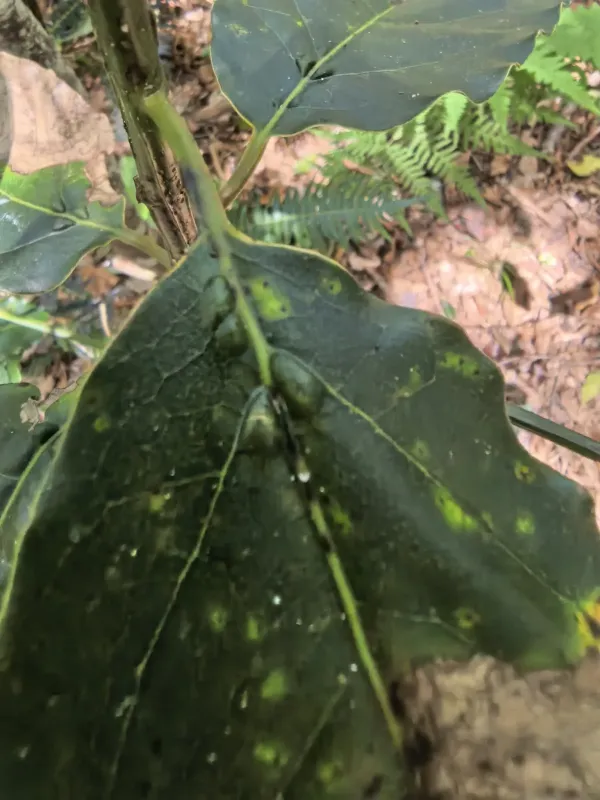
Description
Sowing dates
Propagation of Ocotea bullata in the wild occurs primarily through seeds dispersed by birds. Agricultural cultivation is challenging due to specific germination requirements, as the seeds lose viability rapidly after collection.
In nursery conditions, only freshly harvested seeds, cleaned of fruit pulp, are used for propagation. Sowing is performed in high-moisture substrates with excellent aeration, maintaining stable ambient temperatures.
Germination time varies from several weeks to months, necessitating strict control of greenhouse microclimates. Seedlings require shade, as direct sunlight is detrimental to young, tender plants.
Transplanting saplings into the field occurs after they reach a height of 30–50 cm, typically in the second or third year of growth. The planting site must emulate forest floor conditions, rich in organic matter.
The species is characterized by an extremely slow growth rate, making it unsuitable for commercial timber plantations but highly valuable for ecological restoration and conservation projects.
Growing requirements
Ocotea bullata belongs to the Lauraceae family and is endemic to South Africa. The plant has high requirements for soil and air moisture, preferring regions with significant, regular rainfall.
Optimal growth conditions include deep, nutrient-rich forest soils with a neutral to slightly acidic pH. The tree is highly sensitive to substrate desiccation and requires constant moisture levels to thrive.
Climatic preferences are limited to temperate-warm zones with mild winters, as the species is intolerant of heavy frost. In its natural habitat, it grows in mountain forests at various elevations.
Adequate protection from strong winds is essential for normal development to prevent damage to foliage and young branches. Light should be filtered and diffuse, typical of the understory and mid-story levels of evergreen forests.
A crucial aspect of its agrotechnology is the symbiosis with soil microflora, which ensures the bioavailability of essential micronutrients. Excessive mineral fertilization should be avoided as it may inhibit natural mycorrhizal networks.
Yield
The economic value of Ocotea bullata lies in its high-quality timber, globally known as Stinkwood. Due to its slow growth, the harvest cycle spans several decades or even centuries.
The timber is characterized by exceptional strength, durability, and a unique grain, making it one of the most expensive and sought-after woods for high-end furniture manufacturing.
Yield, in forestry terms, is calculated by the volume of commercial timber per hectare once the tree reaches biological maturity, which usually exceeds 80–100 years.
In contemporary settings, the harvesting of wild specimens is strictly regulated or prohibited by law due to the decline of the species in its natural habitat.
Current usage of the crop focuses more on landscape design, botanical conservation, and preserving genetic diversity rather than industrial lumber production.
Main diseases and pests
The primary threat to existing populations is the invasion of non-native plant species that outcompete young stinkwood saplings. Competition for light and soil nutrients is a critical survival factor.
Pests include specific phytophagous insects that damage the bark and cambium of mature trees, leaving the trunk vulnerable to secondary fungal infections.
Improper moisture management during cultivation often leads to root rot, caused by pathogenic fungi belonging to the genus Phytophthora.
Human-driven factors, such as over-exploitation of natural resources and climate change, significantly reduce the area of suitable habitats.
- Leaf spot diseases.
- Borer insect damage when the tree is stressed.
- Frost damage in regions with abnormally low temperatures.