
Sintoc cinnamon
Cinnamomum sintoc
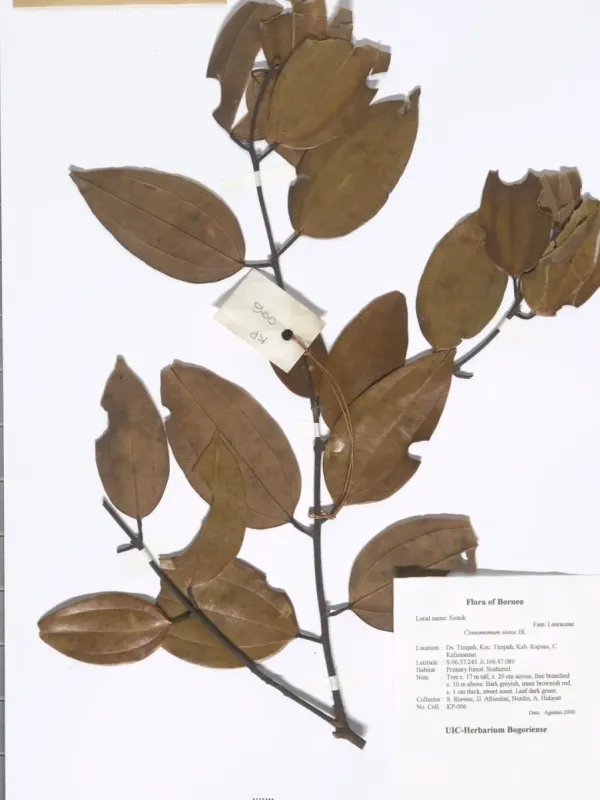
Description
Growing requirements
Sintoc cinnamon (Cinnamomum sintoc) is a perennial evergreen tree belonging to the Lauraceae family. It is native to the tropical forests of Southeast Asia and is primarily valued for its aromatic bark, which is harvested for spice and essential oil production.
The crop thrives in a humid tropical climate characterized by high annual temperatures and consistent rainfall. It does not tolerate frost or cold stress, requiring sheltered locations to maintain stable growth patterns throughout the year.
Ideal soil conditions involve deep, well-draining, and nutrient-rich substrates. The plant is particularly susceptible to waterlogging, so planting on elevated terrain or sloped areas is highly recommended to ensure proper root health and aeration.
Agricultural management requires regular soil moisture monitoring and the application of organic fertilizers to maintain fertility. Because the plant is sensitive to intense heat during its early developmental stages, intercropping or artificial shading is often implemented.
Pruning is a fundamental part of the cultivation process, aimed at developing a strong frame for the tree. Proper canopy management not only facilitates easier harvesting of the bark but also enhances the overall vigor and productivity of the individual tree.
Yield
The primary economic output is the inner bark, which is processed into various spices. Productivity is measured by the quality and essential oil content of the bark, which increases as the tree matures, typically after several years of growth in a plantation setting.
Secondary yields include the leaves and twigs, which are also distilled to produce specialized essential oils for the pharmaceutical and fragrance industries. These by-products add significant value to the agricultural operation, maximizing the utilization of the tree.
Main diseases and pests
The crop is prone to fungal pathogens, particularly root rot, which typically emerges in poorly drained or overly humid conditions. Effective management involves rigorous monitoring and the immediate removal of infected plant materials to prevent widespread outbreak.
Various insects and mites can compromise the foliage and bark, requiring an integrated pest management (IPM) approach. Emphasis is placed on utilizing natural predators and safe environmental controls to ensure the final product meets international quality standards.