
Cinnamomum bejolghota
Cinnamomum bejolghota
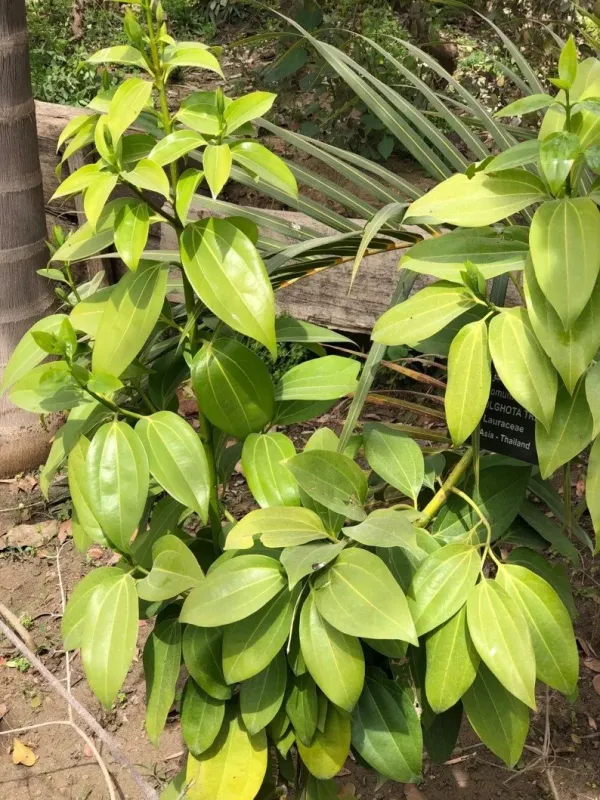
Description
Sowing dates
Propagation of Cinnamomum bejolghota is primarily achieved through seeds in nursery environments. The optimal time for sowing aligns with the onset of the rainy season to ensure sufficient soil moisture for germination.
The seeds possess low longevity and must be planted immediately after collection to maintain high germination rates. Removing the fleshy fruit layer prior to sowing helps to improve the uniformity of sprout emergence.
A well-drained substrate rich in organic matter is recommended for the initial development of the seedlings. Maintaining a soil temperature of approximately 25 degrees Celsius is crucial for success.
Young seedlings require partial shade during their first months to prevent leaf desiccation from direct sunlight. Once the plants reach a height of 30 to 40 centimeters, they are ready for field transplanting.
Planting density depends on the specific commercial goal: high-density planting is common for leaf harvest, while wider spacing is preferred for timber or bark production.
Growing requirements
This species thrives in humid tropical climates and requires high annual precipitation, ideally exceeding 2000 millimeters. It is highly sensitive to frost and sudden temperature drops.
Deep, fertile, and well-drained loamy soils are essential for healthy growth. Waterlogging must be avoided as it promotes root rot and systemic infections in the plant tissue.
Cinnamomum bejolghota prefers slightly acidic soil pH levels. Regular incorporation of organic mulch can help improve soil fertility and maintain consistent moisture levels near the surface.
The tree requires protection from strong winds that can break delicate branches and damage the canopy. It performs best in lowland tropical forests or sheltered foothill areas.
Sunlight requirements vary with age, as saplings are vulnerable to intense direct light, whereas mature trees require full sun for optimal development and oil synthesis.
Yield
Economic yields are derived from the bark, leaves, and seeds, which contain aromatic compounds. Bark harvesting typically commences when trees are between 5 and 7 years old.
Leaves provide a more frequent source of income, as they can be harvested more regularly once the tree has established a robust canopy. The essential oil content varies by season.
Yield efficiency is significantly improved by systematic pruning, which promotes the growth of secondary shoots. Proper management ensures a consistent supply of raw material.
Seeds are harvested when the fruits reach full maturity, indicated by a dark purple or black skin color. They are valuable in traditional medicine and specific culinary applications.
Maximizing yields requires monitoring soil nutrient levels and applying balanced fertilizers during the primary growth cycles to support biomass production.
Main diseases and pests
Root rot caused by waterlogging is a critical threat that can quickly destroy plantations. Ensuring proper drainage is the most effective preventative measure against this condition.
Leaf-feeding insects and beetles can cause significant defoliation, particularly in young plantations. Regular monitoring and biological pest control are recommended practices.
Fungal leaf spot diseases are common in areas with poor airflow and high humidity. Thinning the canopy helps to improve ventilation and reduce the incidence of infection.
Termites can pose a danger by attacking the roots and stems of mature trees. Maintaining plantation hygiene by removing dead wood helps keep termite populations under control.
Integrated pest management strategies should be employed to minimize the use of chemical pesticides and protect the quality of the aromatic oil produced by the trees.
Harvesting
Bark harvesting is most effective during the early rainy season, as the cambium layer is active and the bark peels easily. The material must be dried in shaded areas to preserve quality.
Leaf collection is performed by selective pruning, ensuring the tree is not overly stressed. The raw leaves must be processed shortly after harvest to prevent rapid degradation of oils.
Fruit collection is a selective process, as the fruits do not ripen simultaneously across the entire tree. Seeds must be cleaned and dried immediately after harvesting.
Post-harvest storage requires cool, dry, and well-ventilated conditions to prevent mold and loss of volatile compounds. Airtight packaging is often used for high-quality aromatic parts.
The final product quality is heavily dependent on the speed and care taken during the drying process, as excessive heat can lead to the evaporation of essential oils.