
Brazilian rosewood
Aniba rosaeodora Ducke
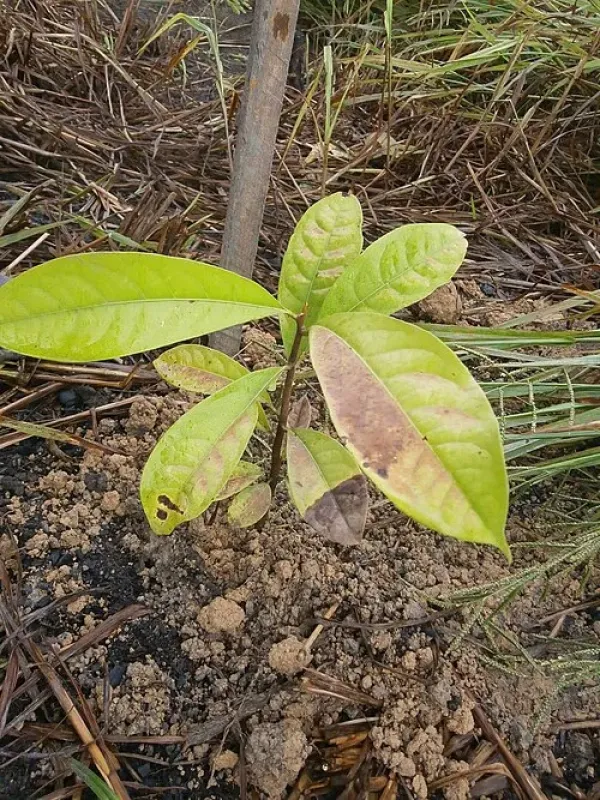
Description
Sowing dates
Propagation of Brazilian rosewood is primarily achieved through seeds, which must be sown shortly after harvesting due to their recalcitrant nature. The seeds should be cleaned and planted in a well-draining substrate rich in organic matter to promote successful germination.
Nursery conditions are critical during the early stages, requiring a high humidity environment and a stable temperature between 25 and 30 degrees Celsius. Seedlings are typically kept in specialized containers with automated misting systems to ensure consistent moisture levels.
Germination usually occurs within a few weeks, after which the seedlings require partial shading to protect them from intense tropical sunlight. Gradual exposure to sunlight is necessary as the plants grow stronger to encourage healthy leaf development.
Transplanting into forest plantations is generally timed with the start of the rainy season to allow the root system to establish itself before the onset of drier conditions. Planting site preparation includes clearing underbrush to reduce competition for nutrients.
Adhering to correct plant spacing is vital for the long-term health of the plantation, allowing for sufficient airflow and light penetration for every tree. Proper early-stage maintenance ensures a higher survival rate of the young stock.
Growing requirements
As a member of the Lauraceae family, Aniba rosaeodora thrives in tropical climates characterized by high annual rainfall and consistent temperatures. It requires a humid environment to maintain active metabolic processes throughout the year.
The ideal soil profile consists of deep, well-drained, acidic clay or loamy soils. Waterlogged conditions are detrimental to the root system, so selecting elevated or sloped sites with natural drainage is essential for plantation longevity.
Brazilian rosewood is a light-demanding species, though young plants benefit from the canopy cover of nurse trees during the first few years of growth. This shade protects the saplings from extreme heat and helps maintain a moist soil microclimate.
Soil fertility management involves regular applications of organic compost to replenish nutrients consumed by the growing trees. Maintaining a thick mulch layer around the base of the trees helps retain soil moisture and improves overall soil structure.
The tree requires minimal intervention if planted in suitable environmental conditions. However, monitoring the forest floor for invasive species that may compete for resources is a necessary component of plantation management.
Yield
The primary value of Aniba rosaeodora lies in its wood, which is processed to extract high-quality essential oil rich in linalool. Harvesting for yield is a long-term investment, as the tree must reach maturity to produce significant quantities of oil.
The concentration of essential oil increases with the age of the tree, typically becoming commercially viable after 15 to 20 years. Selective harvesting strategies, such as pruning specific branches, are increasingly preferred over complete tree removal.
Genetic diversity within the plantation can lead to variations in oil yield and composition. Selecting superior genotypes with higher linalool content is a modern approach to improving plantation productivity and profitability.
Technological advancements in steam distillation have improved the efficiency of extracting oils from wood chips. The quality of the final product is highly dependent on the precision of the extraction process and the freshness of the wood material.
Overall yield is influenced by the interaction between climate, soil quality, and the age of the wood. Sustainable harvesting practices aim to maximize production while maintaining the ecological integrity of the plantation environment.
Main diseases and pests
Root rot pathogens, such as those caused by waterlogged soil conditions, represent one of the most serious threats to Aniba rosaeodora plantations. Proper site selection and drainage management are the most effective ways to mitigate these risks.
Fungal leaf spots can become prevalent in high-humidity areas with stagnant air, potentially reducing the photosynthetic capacity of the trees. Ensuring adequate spacing between trees helps reduce the spread of such pathogens through improved ventilation.
Wood-boring insects are a major concern, as they damage the trunk, which not only affects the growth of the tree but also significantly degrades the quality of the wood used for oil extraction. Regular monitoring for signs of infestation is crucial.
Defoliating insects can occasionally cause significant damage, especially in monotypic stands. Promoting biodiversity within and around the plantation is a proactive strategy to encourage natural predators that help keep pest populations in check.
Integrated pest management (IPM) practices, emphasizing biological controls, are recommended over heavy chemical reliance. This approach ensures the sustainability of the product and preserves the natural ecosystem balance of the plantation.
Harvesting
The harvest process involves the careful selection of trees or branches that meet the required age and maturity criteria. Cutting should be performed in a way that minimizes impact on the surrounding environment and avoids unnecessary waste.
Immediately after cutting, the wood is chipped to a specific size to optimize the distillation process. Quick processing is necessary to prevent the loss of volatile compounds, which evaporate rapidly if the wood is left exposed for long periods.
Steam distillation is the industry standard for extracting the essential oil, ensuring a pure product. The process must be tightly controlled to prevent the degradation of the delicate aromatic compounds found in the wood.
Post-harvest management includes replanting and site rehabilitation to ensure the future productivity of the forest. By treating the plantation as a regenerative resource, growers can ensure consistent production over several decades.
The remaining biomass after oil extraction can be repurposed, for example, as organic mulch or soil conditioner, closing the loop in a sustainable agricultural system. Effective logistics are essential to move raw materials to the distillation units efficiently.