
Aniba bracteata
Aniba bracteata
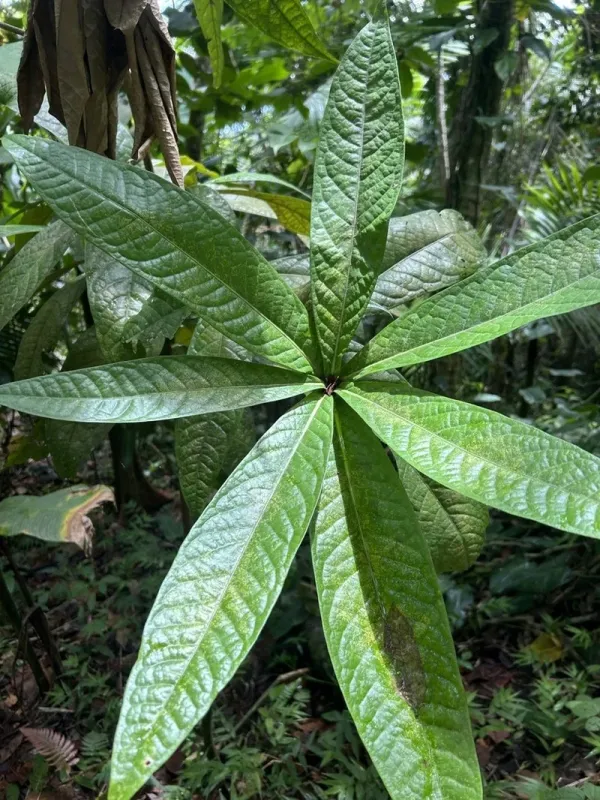
Description
Growing requirements
Aniba bracteata belongs to the Lauraceae family. This evergreen tree species is native to the tropical rainforests of South America, primarily within the Amazon basin and the Guiana Shield regions.
The culture is highly demanding regarding climatic conditions, requiring consistently high temperatures throughout the year and high levels of atmospheric humidity. The species is extremely sensitive to frost.
Successful development of Aniba requires deep, well-drained alluvial or oxisol soils rich in organic matter. Proper drainage is critical as waterlogging causes rapid root decay.
Agrotechnical practices involve mimicking the natural understory conditions of tropical forests. In commercial settings, the trees are often grown within agroforestry systems to provide initial shade.
The main economic use of the species is related to its aromatic wood, which contains valuable essential oils widely utilized in the perfume and cosmetic industries.
Main diseases and pests
The primary threats to Aniba plantations include specific fungal diseases affecting the root system, often triggered by excessive soil moisture levels.
In its native range, the tree is frequently susceptible to wood-boring insects that penetrate the trunk, significantly lowering the commercial quality of the wood.
Phytophthora infections pose a serious threat to young seedlings in nurseries when proper aeration and irrigation management are not maintained.
Competition from fast-growing invasive vines and secondary forest species can effectively suppress the growth of Aniba during its establishment phase.
Human-induced activities, particularly illegal logging and habitat fragmentation, remain the leading causes of the decline of this species in the wild.