
Wavyleaf oak
Quercus undulata
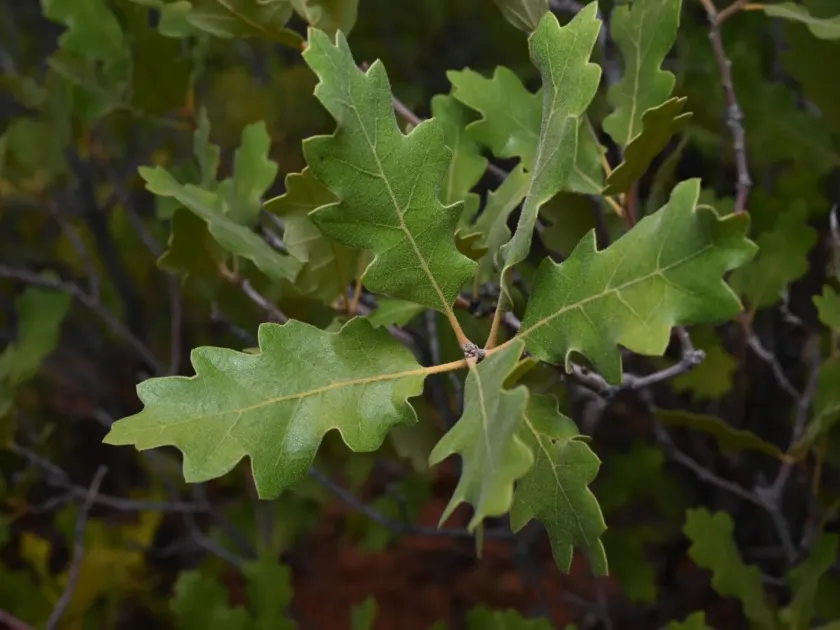
Description
Growing requirements
The Wavyleaf oak (Quercus undulata) is a member of the Fagaceae family, typically growing as a drought-tolerant shrub or small tree. It is highly valued for its resilience in semi-arid environments.
Native to the southwestern United States and northern Mexico, this species thrives in rugged terrain such as canyons and mountain slopes. Its natural distribution is linked to regions with distinct dry seasons.
This culture requires well-drained soil to thrive, making it suitable for rocky landscapes and gravelly substrates. It demonstrates exceptional adaptability to poor soil quality and environmental stressors.
In terms of climate, the Wavyleaf oak prefers regions with high solar exposure. It is well-adapted to wide temperature fluctuations and is considered an important species for dryland reforestation efforts.
The хозяйственное использование (agricultural use) of this species focuses on land stabilization and erosion control. Its complex root structure makes it an excellent choice for revegetating disturbed sites.
Main diseases and pests
Root pathogens represent the most significant threat to the Wavyleaf oak, primarily occurring in soils with poor drainage. Maintaining proper soil aeration is essential for preventing root decay.
Insect pests, including various leaf-eating beetles, can cause localized damage to foliage. Early detection during the growing season is crucial to manage populations and prevent severe defoliation.
Fungal infections, such as powdery mildew, may affect the plant during periods of high humidity or poor air circulation. Proper spacing between individual plants is a key management strategy.
Cultural practices should emphasize sanitary measures, such as the removal of dead wood and leaf litter that may harbor pathogens. Minimizing chemical intervention helps preserve the local ecosystem.
Strategic management involving the promotion of beneficial insect populations can naturally control pest outbreaks, ensuring the longevity and health of the oak plantation.