
Castanopsis
Castanopsis
Castanopsis is a genus of evergreen trees belonging to the Fagaceae family, closely related to the genera Castanea (chestnut) and Quercus (oak). These trees are highly valued in both forestry and horticulture for their dense foliage and edible nuts.
What the section contains

Castanopsis
The genus is primarily adapted to subtropical and tropical environments. Successful cultivation requires a warm climate with consistent rainfall and high humidity. While some species show limited frost tolerance, they generally perform best in areas where extreme winters are avoided.
Regarding soil, Castanopsis trees prefer deep, well-draining, acidic substrates. They thrive in mountainous regions where moisture is abundant, but stagnant water around the root zone must be avoided to prevent fungal issues and root rot.
In terms of agricultural management, regular maintenance of the crown is necessary for young trees to develop a strong structure. Planting density should be carefully calculated to ensure adequate light penetration for every individual tree as it matures.
Propagation is typically carried out through seeds, which must be sown fresh due to their short viability period. Nursery management during the first few years is crucial, requiring careful shade control and irrigation.
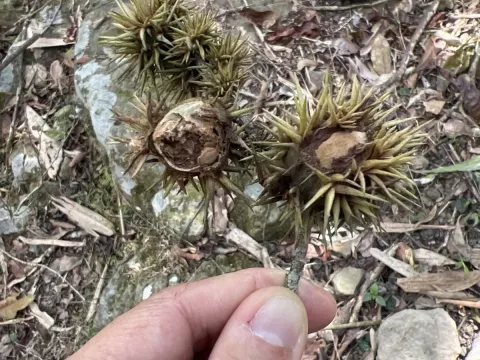
Castanopsis trees produce nuts encased in a spiny, often woody cupule. These nuts are a vital food source and have been traditionally used as a staple ingredient in various Asian cuisines, often processed into flour or roasted.
Yield stability depends heavily on the tree's health and the availability of nutrients in the soil. Mature trees can produce significant quantities of nuts, provided that the canopy remains clear of diseases and competitive vegetation.
From a commercial perspective, the wood of the Castanopsis is highly regarded. Its durability and grain structure make it suitable for high-quality carpentry, flooring, and exterior construction projects.
Harvesting efficiency is improved by focusing on the period when the spiny burs begin to split open. In orchard settings, the use of protective gear and nets under the canopy is common practice to minimize fruit loss.
Post-harvest handling is critical for maintaining quality. Nuts should be cured or dried properly to reduce moisture content, which helps in preventing post-harvest mold and prolonging shelf life for storage or export.
The primary threats to Castanopsis plantations are related to moisture-borne pathogens. Phytophthora species are known to cause significant damage to the root systems, often leading to rapid tree decline in poorly drained soils.
Pest pressure from borers and nut weevils can significantly impact the harvest. These insects drill into the fruit or stems, creating entry points for secondary infections and compromising the structural integrity of the wood.
Integrated Pest Management (IPM) is essential for sustainable production. This includes the use of pheromone traps, encouraging natural predators, and selective use of biological controls to keep insect populations below economic thresholds.
Sanitation plays a major role in disease control. Removing and destroying infected plant parts, including fallen leaves and diseased branches, prevents the survival and spread of fungal spores throughout the plantation.
Maintaining a balanced nutritional status is key to tree vigor. Over-fertilization, especially with nitrogen, can stimulate soft vegetative growth that is more susceptible to aphids and other sucking insects during the early growth stages.