
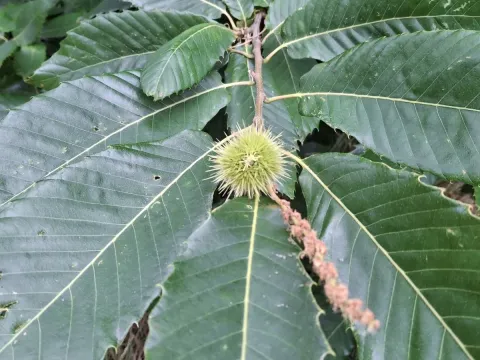
Sweet chestnut
Castanea Mill.
Sweet chestnut (Castanea sativa) is typically propagated by planting seeds or via grafting. Seeds require cold stratification for at least 2-3 months to break dormancy before being sown into well-draining, fertile soil at a depth of 5-7 centimeters.
What the section contains


Sweet chestnut
For commercial orchards, grafting is the preferred method as it ensures the consistency of fruit quality and significantly reduces the time required for the tree to reach maturity compared to seedlings.
Trees should be spaced 8-10 meters apart to accommodate their large canopy and extensive root system. Proper spacing is vital for air circulation, which prevents the build-up of moisture and potential fungal infections.
Transplanting seedlings to the field is best performed in early spring or late autumn when the tree is dormant. Protecting young saplings from frost and animal damage is essential during the first years of establishment.
Regular pruning and training are required during the first years to develop a strong structural framework. This maintenance ensures the tree remains healthy and capable of supporting heavy crops in later years.
Sweet chestnut belongs to the Fagaceae family and thrives in temperate climates. It prefers sunny, sheltered locations protected from harsh winds, which can damage the flowers and reduce fruit set.
The species requires deep, well-draining soils with a slightly acidic to neutral pH. It is highly sensitive to waterlogged soils, which can lead to root rot; therefore, selecting an site with appropriate soil structure is critical.
Temperature plays a major role in cultivation, as late spring frosts can destroy the flowers. A long, warm growing season is necessary for the nuts to ripen fully before the arrival of autumn frosts.
While mature trees are somewhat drought-tolerant, supplemental irrigation is crucial during periods of summer water stress to ensure nut development. Mulching the base of the tree helps retain soil moisture.
Nutrient management involves balanced applications of potassium and phosphorus to enhance fruit quality. Excessive nitrogen should be avoided as it stimulates excessive vegetative growth at the expense of nut yield.
Seed-grown trees typically begin bearing fruit between 7 and 10 years of age, whereas grafted cultivars can produce a harvest as early as 3-5 years after planting. Peak production usually occurs between 20 and 30 years.
A healthy, mature tree can produce between 30 and 50 kilograms of chestnuts in a productive year. Productivity is highly dependent on cross-pollination, so planting multiple varieties in an orchard is recommended.
Fruit set and yield are susceptible to environmental factors, especially rainfall patterns during the pollination phase. Consistent moisture levels are required for the development of large, high-quality nuts.
In well-managed, intensive orchards, yields can reach 2-4 tons per hectare. Monitoring soil health and providing adequate irrigation ensures that the trees maintain high productivity over their lifespan.
The size and uniformity of the nuts are key quality indicators. Proper orchard management, including pest control and fertilization, directly contributes to the market value of the harvested crop.
Chestnut blight, caused by the fungus Cryphonectria parasitica, is the most severe threat to the species, causing cankers on the bark. Management relies on strict quarantine and the use of resistant varieties.
Powdery mildew is a common foliage disease that can weaken trees by reducing photosynthetic capacity. Fungicide treatments during the growing season are effective in limiting the spread of this pathogen.
The chestnut gall wasp is a significant pest that induces galls on buds and shoots, severely reducing tree vigor and yield. Biological control agents are often employed to manage this pest effectively.
Defoliating insects can cause significant damage to the canopy, requiring regular monitoring. Integrated pest management strategies, including the use of selective insecticides, are essential in commercial orchards.
Fruit decay, often caused by mold, can occur if the nuts are not harvested promptly or stored in improper conditions. Maintaining good ventilation during drying and storage is crucial for post-harvest health.
Harvesting begins in autumn when the spiny burs containing the nuts fall to the ground. Manual or mechanized collection from the ground is standard, as shaking the tree can damage the branches and bark.
Nuts should be gathered as soon as possible after falling to minimize exposure to ground moisture and pests. Immediate removal from the bur is recommended to prevent heating and fungal development.
Post-harvest processing involves sorting the nuts and removing any debris. The nuts are then dried in well-ventilated areas to reduce moisture content to safe levels, ensuring long-term shelf stability.
Cool, low-humidity storage is necessary to keep the chestnuts fresh. Improper storage conditions can lead to rapid drying or spoilage of the kernel, which is highly perishable compared to other nuts.
Sweet chestnuts are widely used in culinary applications, including flour production and roasted nut markets. High-quality harvests that are dried and handled correctly maintain their flavor and texture for months.